
We Customize EverythingProudly Since 1922
- Shades & More
- Resource
- Company
A hotel room is judged through small, repeated experiences. A guest reaches for the lamp after checking in, reads beside the bed, charges a phone, and searches for a switch in the dark. These ordinary moments can influence comfort more than dramatic decoration. That is why selecting hotel guest room table lamps requires more than matching a shade to the headboard.
Industry evidence supports a careful approach. The U.S. Department of Energy reports that LED bulbs use at least 75% less energy and last up to 25 times longer than incandescent bulbs. For hotels operating hundreds of rooms, that difference can affect maintenance visits, replacement costs, and energy planning. ENERGY STAR also highlights efficient lighting as a practical way to reduce operating expenses without sacrificing everyday usability. The American Hotel & Lodging Association’s sustainability research shows that environmental performance has become an increasingly visible concern across hospitality operations. Guests may not inspect a lamp’s specification sheet, but they notice glare, heat, weak illumination, and awkward controls.
The details matter.
This guide examines seven practical considerations, including brightness, color temperature, shade design, footprint, durability, safety, and cleaning requirements. It also considers how lamps work with bedside outlets, reading positions, and modern room layouts. Some recommendations will not fit every property. A luxury suite and a compact business room need different solutions. Even a well-designed lamp can fail if its switch is hidden behind a mattress. Thoughtful selection combines guest experience, operational evidence, and honest testing in a real room.
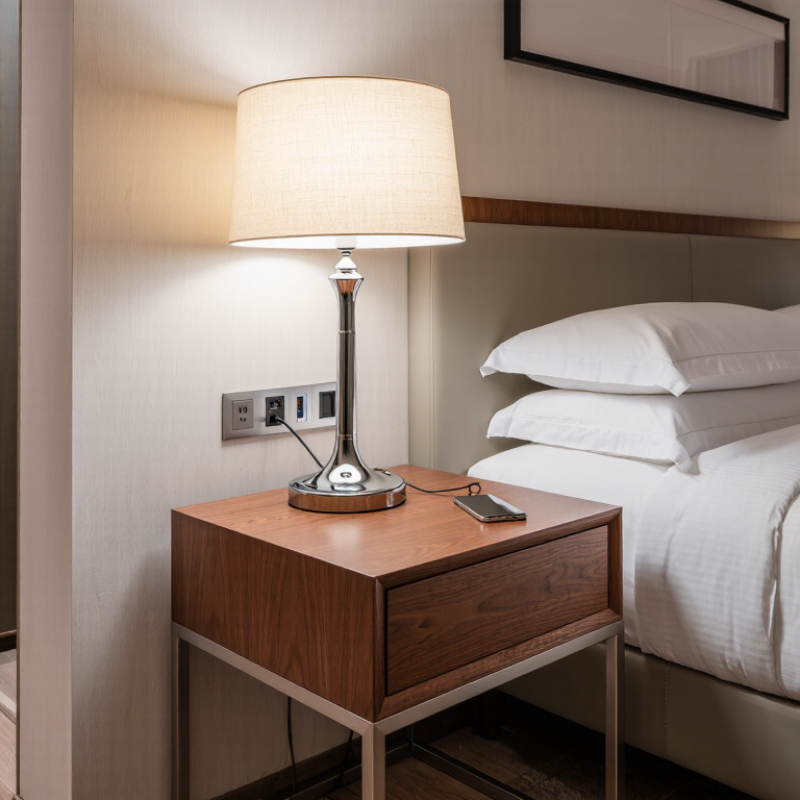
Tip 1: Define the reading task before choosing a hotel guest room table lamp. IES guidance commonly recommends 300–500 lux for reading areas. This range supports menus, novels, and printed invoices without making the bedside feel harsh. Measure light on the actual reading surface, not beside the lamp.
Tip 2: Test the lamp beside the bed. During room checks, place a book where a guest would hold it. A lux meter can reveal uneven lighting caused by deep shades or narrow beams. I once approved a lamp that reached 360 lux near its base. The page edge remained too dark. That mistake was useful. Reading comfort needs coverage, not only a high number.
Tip 3: Balance brightness with glare control. A frosted diffuser, suitable shade height, and adjustable direction can protect tired eyes. Guests may read upright, reclined, or from the opposite side of the bed. Consider these positions. The 300–500 lux target is a practical guide, not a rigid rule for every room. Dark finishes, glossy pages, and nearby windows can change the experience. Check color rendering, too, especially when guests read maps or medication labels. A comfortable lamp should illuminate the page while keeping the surrounding room calm.
| Tip | Design Dimension | Recommended Data or Benchmark | How to Apply It in a Guest Room | Verification Method |
|---|---|---|---|---|
| 1 | Reading illuminance | Provide approximately 300–500 lux on the reading plane, measured at the center of the book or reading surface. | Select a lamp and shade combination that delivers focused light to the reading area without depending only on the room's general lighting. | Measure horizontal illuminance with a calibrated lux meter while the lamp is operating in its normal position. |
| 2 | Reading-plane position | Assess light at the actual reading height, typically around 700–800 mm above the floor when a guest is seated or reclining. | Place the lamp close enough to the bed or lounge chair to illuminate the book, but keep it outside the guest's normal elbow and hand movement zone. | Take readings at several points across the book area rather than at only one point. |
| 3 | Light distribution and uniformity | Aim for even coverage across the reading area; a practical design check is to keep the brightest reading point from being more than about 3 times the darkest point. | Use a shade that diffuses the source and directs light downward. Avoid a very narrow beam that creates a bright spot surrounded by deep shadows. | Measure the center and four edges of the intended reading area, then compare the highest and lowest values. |
| 4 | Glare control | The light source should not be directly visible from normal seated or lying positions. Use shielding that conceals the bright lamp surface. | Choose a shade with an opaque or translucent upper section and position the lamp so its brightest surface remains below the guest's direct line of sight. | Inspect the lamp from the pillow, chair, and standing viewpoints; reposition it if the source causes discomfort or reflected glare. |
| 5 | Color temperature | A warm-to-neutral white range of approximately 2700–3000 K supports a comfortable hospitality atmosphere while remaining suitable for reading. | Use a consistent color appearance between bedside lamps and nearby room lighting to prevent noticeable color shifts across the guest's field of view. | Confirm the lamp's rated correlated color temperature and compare it visually with the room's other light sources. |
| 6 | Color rendering | Specify a minimum CRI of 80; a higher color-rendering level can improve the appearance of printed pages, textiles, and interior finishes. | Select a light source that renders neutral paper and colored room materials naturally without producing a visibly green, pink, or blue cast. | Review the product's documented CRI value and inspect printed reading material under the installed lamp. |
| 7 | Controls, dimming, and energy use | Provide an accessible switch or dimmer, and consider an LED source with efficient operation and a rated life of at least 25,000 hours. | Install controls where guests can reach them from the bed or chair. Dimming allows users to reduce light after reading while maintaining the 300–500 lux setting when needed. | Test the control from the normal guest position and record illuminance at both the preferred reading level and the lowest comfortable setting. |
Measurement note: Illuminance is measured in lux, where 1 lux equals 1 lumen per square metre. Final selections should be checked in the furnished room because shade material, wall finishes, lamp height, and nearby surfaces can change the measured result.
Aim for about 300–500 lux on the reading surface. Measure the book page, not the area beside the lamp. A bright base does not guarantee comfortable coverage.
Place a book where a guest would normally hold it. Check the page center and edges with a lux meter. The edge may remain dark. Test upright and reclined positions.
Use a frosted diffuser or fabric shade. Choose a suitable shade height and adjustable direction. Avoid exposing a bright light source directly. Glossy pages and phone screens can reveal glare quickly.
Choose an LED source with a CRI of 80 or higher. Higher color quality makes skin, clothing, maps, and pages look more natural. Minimum specifications can still disappoint.
Warm white light around 2700K to 3000K often feels relaxing. It can support reading without making the room feel clinical. Test it in both daytime and evening conditions.
Keep the switch reachable without stretching across the nightstand. Route the cord away from walking paths. Leave clear space around the lamp base. Small placement errors create daily irritation.
Confirm a recognized safety certification and matching model documentation. Verify the listing through an official certification directory. Inspect the base, cord exit, shade, socket, and switch. A sample test can expose loose fittings or noisy operation.
Check the warranty period, covered parts, labor terms, and commercial-use conditions. Confirm coverage for switches, cords, sockets, and internal wiring. Ask who ships replacements and how quickly. Vague wording may become an expensive delay.
Test samples beside an actual bed for several days. Check reading brightness, glare, heat, switching, stability, and surface wear. Record results and approved model details. Our earlier attractive lamp felt harsh after ten minutes. That mistake still matters.
Choosing the right hotel guest room table lamps can improve both comfort and functionality for travelers. Start by defining guests’ reading needs and aim for approximately 300–500 lux at the reading surface, following recognized lighting guidance. Select guest-friendly LED lamps with a color rendering index of at least 80 so fabrics, décor, and personal items appear more natural. For a calm and welcoming atmosphere, choose warm-white light in the 2700–3000K range, which creates a relaxing mood without feeling too dim.
Efficiency, safety, and long-term durability are also essential considerations. LED lighting can use about 75% less energy than traditional incandescent sources, helping reduce operating costs and environmental impact. Before purchasing, verify that each lamp meets applicable UL 153 safety requirements and review the warranty terms carefully. A well-designed lamp should combine comfortable illumination, reliable construction, simple controls, and a style that complements the room while serving guests consistently.