
0%

Choosing senior living ceiling fixtures in 2026 means looking beyond appearance. A fixture can brighten a hallway, soften a bedroom, or leave glare across a resident’s field of view. Small details matter: the position of a diffuser, the ease of cleaning, and whether staff can replace a lamp without disrupting residents. This guide introduces practical questions for comparing senior living ceiling fixtures, from light quality and controls to durability and maintenance.

Lighting researcher Mariana Figueiro’s work explores how light relates to vision and daily rhythms. A research-based takeaway, paraphrased rather than quoted, is: “Light affects more than visibility; its timing and quality can influence daily life.” That perspective is useful when weighing warm, comfortable evening light against brighter illumination for daytime activities. It is not a substitute for a site assessment. Room layout, resident needs, and existing controls all matter.

Look closely. A polished product photo cannot show how a fixture feels at night, or how difficult it is to service above a busy corridor. Consider glare, shadows, cleanability, and access to replacement parts. Ask how the fixture performs in bedrooms, dining rooms, and shared spaces—not just in a showroom. Some choices will involve trade-offs. A low-profile design may be easier to maintain, yet feel less decorative. That is worth admitting. The best selection is the one residents can live with comfortably and staff can maintain reliably.
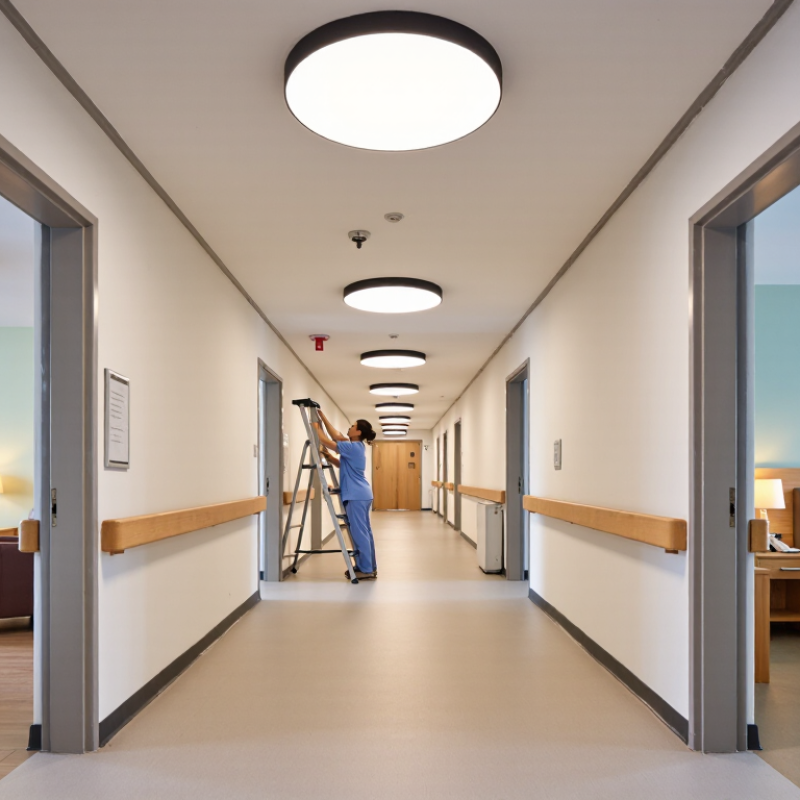
How to Choose Senior Living Ceiling Fixtures in 2026

Understanding Lighting Needs in Senior Living Spaces

Lighting in senior living spaces should support real routines, not simply make a room look bright. Residents may need more light to read, recognize faces, or judge a step’s edge. Even illumination helps reduce confusing patches of brightness and shadow. Glare is tiring. Choose ceiling fixtures with diffused output, and check how light falls on polished floors, dining tables, and glossy surfaces.

Different rooms call for different lighting. A corridor needs consistent light along its full length, including near doorways and changes in floor level. In bedrooms, residents benefit from clear, comfortable light for dressing and moving around at night. Controls should be easy to find and operate from a seated or standing position. Small details matter. A switch hidden behind furniture can defeat an otherwise thoughtful plan.

Before selecting fixtures, observe the space at different times of day and ask residents and care staff what feels difficult. A sample fixture can reveal harsh shadows or reflections that a product sheet will not show. Consider color quality, maintenance access, and whether replacement lamps remain readily available. Needs vary, and a brighter setting is not always a better one. I still think lighting plans can overlook quieter residents; their feedback deserves a place in the assessment.

Assessing Room Layout, Ceiling Height, and Existing Wiring

Start with how residents use the room, not with a fixture photo. In a bedroom, mark the bed, doorway, wardrobe, and usual path to the bathroom. A ceiling light directly over a pillow can cause glare; a chair in a reading corner may need a separate, softer source. Keep walking routes evenly lit, and check that open doors or lift equipment will not block the fixture. Small details matter. Measure ceiling height at the lowest point, including beams or soffits. In a low room, a close-to-ceiling fixture usually leaves more clearance than a pendant. Still, a flush fixture with a small diffuser can cast hard shadows.

Locate the existing ceiling box and compare it with your room plan. It may be off-center, or connected to a wall switch that residents cannot easily reach. Note whether a dimmer is present. An older dimmer may not work with a new LED fixture. Wiring condition and box support matter, especially with heavier fittings. Ask a qualified electrician to check these details before installation. Photos are useful, but they cannot show what is behind the ceiling. Check twice. Even careful measurements can miss a low beam or a switch location that proves inconvenient. Choose a fixture that suits the actual box position and ceiling height, then assess glare from both the bed and seated eye level.

How to Choose Senior Living Ceiling Fixtures in 2026

Compare the finished fixture-bottom height for example ceiling heights and fixture drops. Values are calculated in inches; they are examples, not required clearances.

How to use this: Measure the ceiling and account for the fixture’s full drop. Check room layout for glare and even light, and verify that existing wiring and the ceiling box are suitable. Confirm installation requirements with the fixture instructions and a qualified electrician.

Comparing Ceiling Fixture Types and Light Sources

In senior living, ceiling fixtures should make faces, floors, and room edges easy to see without producing harsh glare. Recessed downlights keep ceilings visually clear, but poorly aimed beams can create bright spots on polished floors. Surface-mounted fixtures are easier to access for maintenance and can spread light more evenly in bedrooms or shared lounges. Linear fixtures work well along corridors, though evenly spaced units may still leave shadows near doorways. Small details matter.

Indirect or cove lighting can soften a room, while pendants add a familiar focal point over dining tables. However, low-hanging fixtures may obstruct views or create obstacles for residents using mobility aids. The right choice depends on ceiling height, room use, cleaning routines, and residents’ visual needs. A sample installation is useful; plans on paper can make a space seem brighter than it feels.

LED sources are common because they use energy efficiently and offer long service life, but light quality varies. Check color rendering, dimming compatibility, and whether the light flickers at lower settings. Warm-white light can feel comfortable in bedrooms, while neutral-white light may help staff distinguish colors during care tasks. Adjustable controls give residents more choice, though complicated switches can frustrate people. Not every room agrees. Test fixtures at seated and standing eye levels, and review the result with a qualified lighting professional before specifying the full building.

How to Choose Senior Living Ceiling Fixtures in 2026 — Comparing Ceiling Fixture Types and Light Sources
Fixture Type Common Light Source Typical System Efficacy Typical Rated Life Comfort and Visibility Maintenance and Controls Potential Senior-Living Uses
Recessed downlight Integrated LED module; some housings accept replaceable LED lamps About 70–110 lumens per watt About 25,000–50,000 hours for many LED products Can provide focused light. Deep regress, suitable optics, and glare-control accessories can reduce direct view of the light source. Integrated modules may require replacement of the light engine or fixture. Confirm dimmer compatibility and access to drivers before installation. Bathrooms, corridors, and selected common areas where the ceiling construction allows recessed installation.
Surface-mounted flush or semi-flush fixture Integrated LED or replaceable LED lamps About 70–120 lumens per watt About 25,000–50,000 hours for many LED products A broad diffuser can distribute light more evenly than a bare lamp. Check for visible brightness and reflections from glossy floors or surfaces. Usually easier to access than recessed equipment. Select fixtures with documented dimming performance and replaceable parts where practical. Resident rooms, smaller lounges, and areas with limited ceiling depth.
Linear LED panel or troffer Integrated LED; older troffers may use linear fluorescent lamps LED: about 90–130 lumens per watt; fluorescent systems vary by lamp and ballast LED: about 25,000–50,000 hours; fluorescent lamps commonly about 10,000–20,000 hours Large luminous surfaces can provide relatively uniform ambient light. A low-glare lens or louver can help manage brightness and visual discomfort. LED panels may require driver or module service. Fluorescent systems need lamp and ballast maintenance; check local rules for lamp disposal. Dining rooms, activity rooms, and other spaces with suspended ceilings.
Pendant fixture Integrated LED or replaceable LED lamps About 70–120 lumens per watt About 25,000–50,000 hours for many LED products Can bring light closer to a table or seating area. Shield the source and assess head-height clearance, shadows, and glare from seated viewpoints. Accessible for servicing, but mounting and suspension must be secure. Use dimming only with compatible fixtures and controls. Dining tables, reception areas, and selected lounge settings; avoid low-hanging fixtures in circulation paths.
Indirect or cove ceiling lighting Linear LED strips or linear LED fixtures About 70–120 lumens per watt, depending on the system and optical losses About 25,000–50,000 hours for many LED products Light reflected from the ceiling can soften shadows and reduce direct glare. Output depends on ceiling reflectance, cove geometry, and installation quality. Drivers and light strips need accessible service locations. Confirm that the installation provides enough light for the space, not just a decorative effect. Lounges, corridors, and common areas where a softer ambient-light layer is desired.
Legacy fluorescent ceiling fixture Linear or compact fluorescent lamps with a compatible ballast Typically about 60–100 lumens per watt for the complete system, depending on lamp and ballast Commonly about 10,000–20,000 hours for fluorescent lamps Light quality varies with lamp, ballast, and fixture. Older equipment may flicker or have limited dimming capability. Requires lamp and ballast upkeep. When renovating, compare the cost and compatibility of LED retrofit components with full fixture replacement. Existing installations where immediate replacement is impractical; assess condition, control compatibility, and local requirements.

Selection note: Figures are broad, manufacturer-independent ranges; actual performance varies by fixture, optics, driver, operating conditions, and testing method. Review product photometric data, glare control, color rendering, dimmer compatibility, and applicable local codes. For resident comfort, evaluate lighting from both standing and seated viewpoints and provide appropriate task lighting where needed.

Evaluating Safety, Accessibility, and Ease of Maintenance

In 2026, senior living ceiling fixtures should make everyday tasks clearer without adding glare or obstacles. The CDC reports that about one in four adults aged 65 and older falls each year. That makes even lighting across corridors, bathrooms, and bedside areas a practical safety measure. The Illuminating Engineering Society’s RP-28 guidance addresses lighting for older adults and people with visual impairments; use it when reviewing light levels, contrast, and glare with a qualified lighting professional. A bright spot beside a dim hallway is not enough.

Check how residents and staff actually use each room. Diffused lenses can reduce harsh glare, while accessible switches and simple dimming controls let staff adjust light for rest or personal care. Keep fixtures clear of lift paths and door swings, and choose securely fastened covers that are easy to inspect. Small details matter. A control placed too high may be technically functional but inconvenient in daily use.

Maintenance deserves equal weight. The U.S. Department of Energy notes that LED bulbs can last up to 25 times longer than incandescent bulbs, potentially reducing replacement work. Still, lifespan varies by product and operating conditions. Select fixtures with replaceable components, smooth surfaces, and covers staff can clean without special tools. Before installation, test a sample at night: reflections on polished floors can be more distracting than expected, and plans often miss that.

Selecting Fixtures for Comfort, Efficiency, and Long-Term Use

Comfort starts with light that feels steady, not stark. In resident rooms and shared lounges, choose ceiling fixtures that spread light evenly across faces, floors, and reading areas. A frosted lens can soften glare, while a high color-rendering rating helps clothing and skin tones look natural. Small details matter. Check how the fixture looks from a seated position, especially near windows where daylight changes throughout the day. Dimming can support quiet evenings and brighter daytime activities, but controls should remain simple and easy to reach.

Efficiency matters over years, not just on the first utility bill. Compare expected energy use, rated service life, and whether common parts can be replaced without removing the whole fixture. In kitchens and bathrooms, consider moisture-resistant construction and surfaces that staff can clean safely. Ask maintenance staff how they will access the fixture and what replacement parts they can keep on hand. Quiet matters, too. Some controls or drivers may create faint buzzing, so test a sample in a calm room before ordering many units. A small trial can reveal issues that a specification sheet misses. I would not assume one fixture suits every ceiling height or resident need; a quick on-site review is worth the time.

FAQS

How should I plan a ceiling light for a bedroom?

Mark the bed, doorway, wardrobe, and route to the bathroom. Avoid placing a bright fixture directly above pillows. A reading chair may need softer, separate light.

What should I measure before choosing a fixture?

Measure ceiling height at its lowest point, including beams and soffits. Check the ceiling box location and nearby switches. Measure twice.

Is a flush fixture always best for a low ceiling?

It usually provides more headroom than a pendant. However, a small diffuser may create hard shadows. Check the light from seated and standing positions.

How can lighting help reduce trip hazards?

Aim for even light across corridors, bathrooms, and bedside areas. A bright patch beside a dim hallway may still leave walking routes hard to see.

What should I check for accessibility?

Make sure switches are easy to reach and simple to use. Keep fixtures clear of door swings and lift paths. Small details matter.

How can I reduce glare in resident rooms?

Choose diffused lenses and check reflections from the bed and seated eye level. Test the fixture at night, especially over polished floors.

What makes a fixture easier to maintain?

Look for smooth surfaces, inspectable covers, and replaceable components. Ask staff how they will reach the fixture and store spare parts.

Are LED fixtures always a better long-term choice?

LEDs can reduce replacement work, but lifespan varies with product and use. Compare energy needs and service life. I might still miss a practical issue without an on-site trial.

Should I test a fixture before ordering several?

Yes. Try a sample in a quiet room and listen for faint buzzing. Check its light during daytime and evening conditions.

Conclusion

Choosing senior living ceiling fixtures in 2026 starts with understanding how residents use each space and what kind of lighting supports comfort, visibility, and daily routines. Consider room size, furniture placement, ceiling height, and existing wiring before selecting a fixture, since these factors affect light distribution, installation needs, and ease of use. Compare fixture styles and light sources by how evenly they illuminate a room and whether their brightness and color feel comfortable throughout the day.

Safety and accessibility should guide every decision. Look for fixtures that are securely installed, simple to clean, and easy to maintain without frequent or complicated adjustments. Efficient lighting can help manage ongoing energy use, while durable materials and replaceable components may support long-term value. By balancing practical requirements with a calm, welcoming atmosphere, senior living ceiling fixtures can make shared and private spaces easier to navigate and more pleasant to spend time in.

Maris

Maris

Maris is a professional marketing specialist dedicated to helping businesses understand innovative products, market trends, and practical solutions. With a strong knowledge of the company’s product portfolio, Maris transforms complex information into clear, useful, and engaging content for......