
The Top 10 Illuminated Room Number Signs for Hotels explores how a small fixture can make a guest’s arrival feel easier. A visitor stepping from a quiet elevator should spot the room number without searching along a dim corridor. Clear lettering, controlled brightness, and readable contrast matter more than decorative effects. The best illuminated room number signs support navigation while fitting the hotel’s interior, from brushed metal panels in a modern lobby to warm, backlit numbers beside a timber door.
Design expert Don Norman offers a useful principle: “Good design is actually a lot harder to notice than poor design, in part because good designs fit our needs so well that the design is invisible.” That idea is relevant here, though it does not replace practical testing in real hotel corridors. This guide compares sign styles by visibility, legibility, materials, installation needs, and design flexibility. It also considers whether lighting remains comfortable at night and whether numbers can be read from common approach angles. Small details count. A beautiful sign can still disappoint if glare washes out the digits or its finish clashes with the door. No single option suits every property. The right choice depends on corridor lighting, guest expectations, maintenance plans, and the building’s character. These selections offer a starting point, not a substitute for checking samples on site.
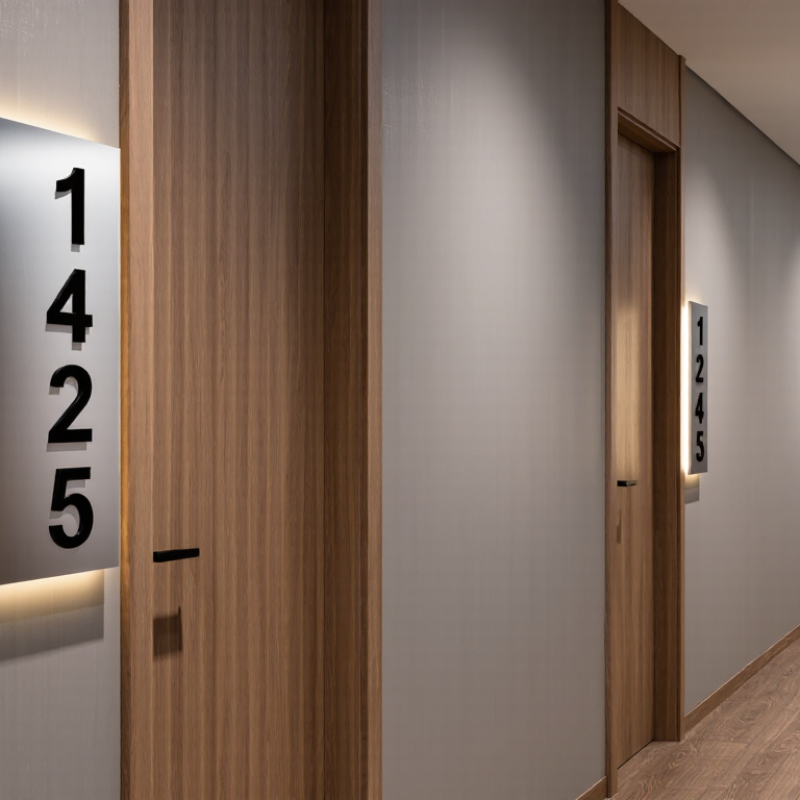
Illuminated room number signs help guests find their rooms without stopping at every doorway. In a quiet corridor, a softly lit number can be easier to spot than a small plaque under dim ceiling lights. This matters after a late arrival, when someone is carrying bags or guiding a tired child. Clear wayfinding also reduces repeated questions at the front desk.
Consistency makes the signs more useful. Keep numbers at a similar height, use readable lettering, and maintain strong contrast between the digits and background. A guest should be able to distinguish 6 from 8 from several steps away. Small details matter. Check sightlines from both ends of the corridor, including around corners and near elevators. Even lighting helps, but excessive brightness can cause glare on glossy walls or glass doors.
The best choice among illuminated room number signs depends on the hotel’s actual layout, not just appearance in a catalog. Test samples at night and during daytime; nearby windows can change how the numbers look. Walk the route yourself. You may notice a sign hidden by an open door or a reflection that makes one digit unclear. Those details are easy to miss during planning, and sometimes the first placement is not quite right. A modest adjustment can make navigation feel more natural.
Hotel room number signs must work at a glance, from the corridor and beside the door. Choose numerals with open shapes, generous spacing, and strong contrast against the sign face. A warm, even halo can guide guests without casting harsh light into nearby rooms. Less glare. Better rest. Avoid tiny lettering, decorative fonts, and bright points that obscure the number from an angle.
Light source and construction affect both upkeep and appearance. The U.S. Department of Energy’s Energy Saver guidance reports that LEDs use at least 75% less energy and last up to 25 times longer than incandescent lighting. That comparison supports LED use, though actual savings depend on operating hours and fixture design. Specify replaceable components, a durable diffuser, and an accessible mounting method. A seamless face may look refined, but repairs can become awkward.
Accessibility needs equal attention. Under the 2010 ADA Standards for Accessible Design, permanent room identification signs require raised characters and Braille; illumination does not replace tactile information. Keep the number readable in daylight and during a power interruption, and test a sample at typical viewing distance. One trade-off deserves a second look: a glowing border can make a sign attractive, yet compete with the number itself. The quietest detail may be the most useful.
| Design Option | Illumination Method | Visibility and Appearance | Mounting and Placement | Power and Controls | Best-Suited Setting |
|---|---|---|---|---|---|
| 1. Backlit acrylic panel | LEDs behind a translucent face illuminate the number panel. | Even, diffused light; contrast depends on face color, number color, and brightness. | Typically wall-mounted beside the door; allow room for the sign body and wiring. | Usually low-voltage LED power supplied by a compatible driver; dimming depends on the driver. | Corridors where a clear, contemporary sign should be easy to spot. |
| 2. Edge-lit acrylic sign | LEDs along one or more panel edges carry light through clear or engraved acrylic. | Creates a slim, luminous outline or illuminated engraving; fine details depend on panel design. | Surface-mounted or attached with stand-offs; a concealed edge may be needed for the light source. | Generally uses low-voltage LEDs; the driver can be placed behind the sign or remotely. | Modern interiors with limited wall depth and a restrained illuminated effect. |
| 3. Halo-lit metal sign | LEDs behind a metal face cast light onto the wall around the sign. | Produces a soft halo rather than a fully glowing face; the effect varies with wall color and spacing. | Mounted off the wall with a small gap to allow the backlight to spread. | Low-voltage LED system with a suitable driver; access for maintenance should be considered. | Hotels seeking a refined, architectural look in corridors or suites. |
| 4. Face-lit panel sign | LEDs illuminate a translucent front face, often with opaque number shapes or graphics. | Strong, direct number visibility; good contrast is important to limit glare. | Usually mounted flat to the wall; position at a consistent, readable height. | Commonly powered by low-voltage LEDs and a driver; some designs support dimming. | Busy corridors where quick room identification is a priority. |
| 5. Recessed flush sign | LEDs are integrated into a sign set within a wall recess. | Low-profile appearance with a clean wall finish; visibility depends on the illuminated face and contrast. | Requires a planned wall cavity and coordination with electrical and finish work. | Wiring and driver access should be planned before installation; service access varies by design. | New builds or major renovations with coordinated architectural detailing. |
| 6. Projecting blade sign | One or both faces are illuminated, commonly with internal LEDs. | Can be seen from along the corridor as well as from directly in front of the room. | Projects perpendicular to the wall; clearance and corridor width must be checked. | Typically uses a concealed low-voltage LED system; wiring can enter through the wall bracket. | Long corridors, angled approaches, and locations where a flat sign may be hard to see. |
| 7. Illuminated frame with replaceable number insert | LEDs illuminate a fixed frame or panel around a replaceable number insert. | Supports number changes while keeping the sign body in place; illumination is usually focused on the display area. | Wall-mounted; the insert should be reachable for updates without removing the complete fixture. | Electrical connection is typically part of the fixed frame; replacement inserts do not normally require rewiring. | Properties where room numbering or layouts may change over time. |
| 8. Tactile and Braille sign with separate illumination | A nearby or integrated light illuminates the sign face; tactile characters and Braille remain physically raised. | Combines visual information with tactile reading; lighting does not replace required tactile details or contrast. | Install in a consistent, accessible location and follow applicable local accessibility standards. | Lighting may use a low-voltage LED module; the tactile elements are not dependent on power. | Guest-room identification where visual and tactile access are both considered. |
| 9. Dimmable illuminated plaque | Integrated LEDs illuminate the number face with an adjustable light level. | Brightness can be tuned to balance legibility with visual comfort in different corridor conditions. | Wall-mounted near the door; avoid aiming bright light directly toward guest-room interiors. | Requires a compatible dimmable driver or control system; compatibility should be confirmed before installation. | Properties that want consistent lighting across changing ambient-light conditions. |
| 10. Motion- or occupancy-controlled sign | LED illumination is activated or increased by a sensor, depending on the control setup. | Can reduce continuous illumination, but sensor coverage and response time affect wayfinding. | Sensor placement must account for corridor traffic, door locations, and potential obstructions. | Uses a compatible sensor and LED driver; some systems require a continuously powered control circuit. | Energy-conscious projects where reliable sensor coverage can be maintained. |
Ten illuminated room-number styles can shape a guest’s first impression before the door opens. Heritage hotels suit warm-white sconces or halo-lit brass numerals; boutique corridors often benefit from edge-lit glass or front-lit acrylic. Modern towers can use slim vertical lightboxes, recessed wall panels, backlit plaques, or color-tunable digital displays. For accessible routes, tactile numbers with illuminated borders and low-level floor markers can improve visibility without making hallways feel overly bright. A little restraint helps.
The U.S. Energy Information Administration’s 2018 Commercial Buildings Energy Consumption Survey reports that lighting accounted for about 17% of electricity use across U.S. commercial buildings. This figure is not hotel-specific, but it supports considering efficient LEDs and dimming controls. Match brightness and color temperature to the setting: a quiet spa corridor may need a softer glow than a busy elevator lobby. A sample can look elegant in a showroom, yet create glare against a glossy wall. Test it in place.
Tips: Check readability from the corridor entrance and beside the door. Keep light even, avoid sharp reflections, and confirm the number remains clear when nearby lights are dimmed.
For hotel room-number signs, material choice affects both appearance and maintenance. Brushed aluminum feels sturdy and wipes clean, while acrylic spreads light evenly but can scratch. Stainless steel suits busy corridors, though fingerprints may show. Choose finishes that match the wall and withstand frequent cleaning. Small details matter.
Lighting should stay readable without shining into guests’ eyes. Edge-lit acrylic creates a crisp outline; internally lit panels offer more even illumination. Warm-white LEDs often feel calmer near guest rooms, while neutral white can improve contrast. The U.S. Department of Energy’s Energy Saver guidance says LEDs use at least 75% less energy and can last up to 25 times longer than incandescent lighting. EIA’s 2018 Commercial Buildings Energy Consumption Survey estimates lighting accounts for about 17% of commercial-building electricity use. Those figures concern lighting broadly, not signs alone.
Installation needs careful measuring. Check sightlines from the corridor entrance, elevator, and a seated position. Hide wiring where practical, but keep drivers accessible for replacement. Use dimmable, low-glare output where late-night brightness could disturb guests. Test at night. Confirm mounting methods suit the wall substrate, and check local accessibility and building requirements; illuminated numbers may not replace tactile identification where required. One awkward reality: even a well-made sign can disappear under harsh ceiling light. A corridor mock-up helps catch that before installation.
A room number sign must be readable before a guest reaches the door. Check it from the corridor entrance, beside the lift, and under the hotel’s actual nighttime lighting. The U.S. Access Board’s 2010 ADA Standards require visual characters to contrast with their background and use a non-glare finish. That matters when a glossy panel catches a ceiling light and hides a digit. Keep numerals large, simple, and separated from decorative graphics. Small details matter. Test each shortlisted sign at eye level, then again from a wheelchair-height viewpoint; a sample on a desk can look clearer than one mounted beside a dark door.
Safety and brand fit should work together, not compete. Avoid bright halos that wash across nearby surfaces, and check that illumination does not obscure tactile or Braille information where required. The U.S. Department of Energy’s Energy Saver guidance says LEDs use at least 75% less energy and last up to 25 times longer than incandescent lighting, making them a practical option for signs lit through the night. Still, energy efficiency alone is not a design brief. Match color temperature and materials to the corridor’s finishes, while preserving strong numeral-to-background contrast. I would be cautious about calling any one style universally “best”: warm light may suit a quiet boutique floor, yet look too dim against patterned wallpaper. A full-scale mock-up can reveal that before installation.
Suggested evaluation weights for comparing sign options. These percentages are a practical planning framework, not survey results or product-test data.
Prioritize legibility, dependable illumination, and accessible placement first. Then compare power and maintenance needs, durability, installation, and how well each option fits the hotel’s visual identity. Confirm applicable accessibility and fire-safety requirements for the property.
They make room numbers easier to spot in dim corridors. Late arrivals carrying bags may find their doors with fewer stops. Less searching.
Use open-shaped numerals, generous spacing, and strong contrast. Guests should distinguish a 6 from an 8 from several steps away.
Choose even, gentle lighting that guides guests without shining into nearby rooms. Excessive brightness can create glare on glass or glossy walls.
Keep them at a consistent height beside each door. Check sightlines from both corridor ends, around corners, and near elevators.
View samples during daylight and at night. Walk the route yourself; a window reflection or open door may hide a number. The first placement may need adjustment.
No. Raised characters and Braille provide tactile information that light cannot replace. Keep numbers readable in daylight and during a power interruption.
LED lighting can use less energy and last longer than incandescent lighting, though actual savings vary. Choose replaceable parts and accessible mounting. Repairs should not become a puzzle.
Yes. Tiny lettering, ornate fonts, bright points, or a glowing border can compete with the number. A quieter design may work better.
Illuminated room number signs help hotel guests find their rooms quickly, especially in long corridors, dimly lit areas, and busy public spaces. A well-designed sign combines clear, readable numbering with balanced lighting, suitable contrast, and a style that complements the property’s interior. This overview explores ten sign styles for different hotel settings, from understated designs for quiet boutique spaces to highly visible options for larger buildings.
Choosing the right signs involves more than appearance. Materials should suit the location and expected wear, while lighting options should provide consistent visibility without creating glare. Installation height, placement, and power access also affect how useful each sign will be. By considering visibility, safety, maintenance, and design fit together, hotels can select illuminated room number signs that make wayfinding easier while supporting a comfortable, cohesive guest experience.