
We Customize EverythingProudly Since 1922
- Shades & More
- Resource
- Company
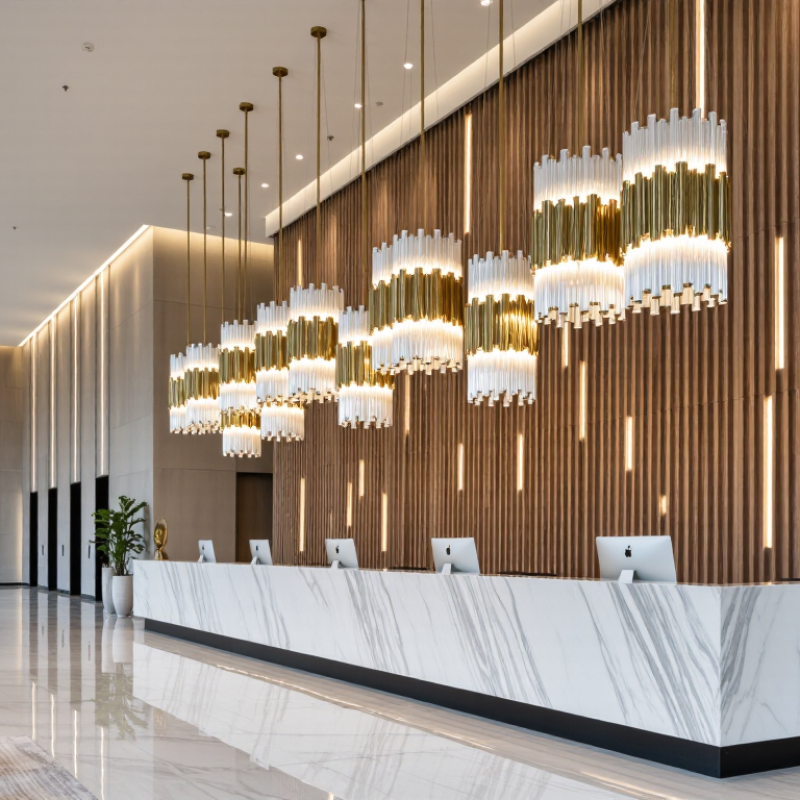
Choosing among the top China custom hotel pendant lights manufacturers requires more than comparing catalogs or factory photos. Hotel lighting must support atmosphere, safety, maintenance, and brand identity. A pendant above a marble reception desk should create controlled sparkle, without producing glare on polished surfaces.
The International Energy Agency reported that lighting consumed about 15% of global electricity in 2018. Its 2024 Energy Efficiency report also stresses the continuing value of efficient lighting upgrades. These findings matter to hotel developers. Efficient LED modules, replaceable drivers, and tested dimming systems can reduce operating pressure over time. However, efficiency figures alone cannot prove product quality.
Lighting educator Howard M. Brandston wrote, “The purpose of lighting is not to make things visible, but to make them visible in a particular way.” His principle explains why custom hotel pendant lights need careful optical design. Size, beam angle, color rendering, suspension height, and ceiling structure all influence the guest experience.
This guide examines leading Chinese manufacturers through practical criteria. These include engineering capability, prototype control, certifications, material consistency, lead times, and after-sales support. It also considers hospitality experience, because a beautiful sample may fail during a busy hotel opening.
No ranking is perfect.
Factory visits, third-party testing, and project references still deserve attention. Some suppliers publish impressive lumen data, yet provide limited information about glare control or driver replacement. That gap should make buyers cautious. The strongest manufacturers combine decorative craftsmanship with documented performance, flexible customization, and dependable communication from concept to installation.
What Defines a Leading Chinese Custom Hotel Pendant Light Manufacturer?
A leading Chinese custom hotel pendant light manufacturer does more than copy a reference image. It translates a designer’s sketch into verified dimensions, weight limits, light distribution, and installation details. On real hotel projects, installers often discover small problems first: short cables, weak ceiling plates, or inaccessible drivers. A capable manufacturer addresses these issues during engineering, not after delivery.
Technical evidence matters. The International Energy Agency reports that lighting represents about 15% of global electricity consumption. Therefore, manufacturers should provide tested LED efficiency, color rendering, dimming compatibility, and expected lifetime data. IES photometric files, sample testing, and clear tolerance records also support professional specification work. Materials should be traceable, with documented finishes and electrical safety testing. A beautiful brass shade is still a risk if its coating fails in humid guest areas.
Customization must include production control. Leading suppliers use approved samples, inspection checkpoints, packaging tests, and installation guides. They should explain lead times honestly, including mold development and replacement-part availability. UN Tourism recorded approximately 1.4 billion international tourist arrivals in 2024, increasing pressure on hospitality projects worldwide. Yet speed should not replace verification. A catalogue can look convincing. It proves little. Even experienced teams can miss glare, cleaning access, or inconsistent color between batches. That is where a manufacturer’s project records, technical communication, and willingness to correct mistakes become meaningful measures of reliability.
| Evaluation Dimension | What a Leading Manufacturer Should Provide | Typical Market Benchmark | Recommended Buyer Evidence |
|---|---|---|---|
| Custom Design Capability | Ability to develop pendant lights from sketches, CAD files, samples, mood boards, or architectural specifications. | 2D drawings, 3D models, material samples, and revised shop drawings are commonly included in the development process. | Approved drawings, technical specifications, finish samples, and a documented revision process. |
| Hotel Project Experience | Experience with guest rooms, lobbies, restaurants, corridors, lounges, and other hospitality areas. | A capable supplier should understand lighting schedules, room-by-room quantities, installation constraints, and project deadlines. | Anonymized project case studies, installation photos, lighting schedules, and client references where available. |
| Material Selection | Controlled selection of metal, glass, crystal, stone, fabric, wood, acrylic, and other decorative materials. | Material thickness, surface finish, color consistency, heat resistance, and structural suitability should be documented. | Material datasheets, finish samples, coating specifications, and approved pre-production samples. |
| Lighting Performance | Suitable lumen output, color temperature, color rendering, beam angle, dimming, and glare control for hospitality use. | Common hospitality specifications include 2700K–3000K for warm ambience and CRI 90 or higher for premium decorative applications. | Photometric files, LED data, driver details, color-consistency information, and sample test results. |
| Electrical Safety | Proper insulation, grounding, strain relief, wiring protection, driver compatibility, and safe heat management. | Products should be designed and tested against the electrical safety requirements applicable to the destination market. | Test reports, wiring diagrams, component specifications, and certificates relevant to the importing country. |
| Compliance Documentation | Clear documentation for product safety, electromagnetic compatibility, restricted substances, and destination-market requirements. | CE, RoHS, UKCA, UL-related, or other documentation may apply depending on the target market and product configuration. | Product-specific declarations, laboratory reports, certificate numbers, and reports matching the actual model. |
| Prototype Development | Ability to produce a functional prototype before mass production and incorporate controlled design changes. | Prototype development commonly takes about 2–8 weeks, depending on complexity, tooling, materials, and approvals. | Prototype schedule, sample approval form, revision records, and clearly defined sample charges. |
| Production Lead Time | Reliable planning for repeat production, project batches, and coordinated delivery schedules. | Standard or repeat custom orders often require approximately 30–60 days after drawing and sample approval; complex projects may require longer. | Written production schedule, milestone dates, capacity confirmation, and delay-management procedure. |
| Minimum Order Quantity | Flexible quantities for mock-up rooms, pilot installations, phased renovations, and full hotel projects. | Custom MOQ may range from a single prototype to several dozen units, depending on tooling, finish, and component sourcing. | Written MOQ, tooling policy, price breaks, and conditions for repeat orders. |
| Quality Control | Inspection of incoming materials, in-process assembly, electrical function, appearance, packaging, and final quantity. | A documented inspection plan should cover critical dimensions, finish consistency, wiring, illumination, and accessories. | Inspection checklist, production photos, final inspection report, and independent inspection access when required. |
| Packaging and Export Readiness | Protection for fragile components, labeled cartons, installation accessories, and export documentation. | Multi-layer protection, impact-resistant inner packaging, moisture control, and carton identification are common requirements for hotel projects. | Packaging specification, carton dimensions, packing photos, drop-test approach, and shipping marks. |
| Installation Support | Clear installation instructions, mounting hardware, wiring information, replacement parts, and technical assistance. | Project-grade suppliers should provide installation drawings and confirm ceiling, weight, suspension, and electrical requirements. | Installation manuals, exploded diagrams, spare-parts list, and site-support contact process. |
| Warranty and After-Sales Service | Defined coverage for LED modules, drivers, structural parts, finishes, and manufacturing defects. | Decorative lighting warranties commonly range from 2–5 years, subject to product design, components, and commercial terms. | Written warranty terms, response-time commitment, spare-parts policy, and claim procedure. |
| Communication and Project Management | Dedicated contact, accurate quotations, controlled documentation, prompt technical feedback, and milestone reporting. | Professional project communication should include quotation validity, payment terms, approval points, delivery terms, and change control. | Sample purchase order, communication workflow, production updates, and agreed escalation contacts. |
Note: Market benchmarks are indicative ranges for initial supplier evaluation. Final requirements depend on the design, destination market, installation conditions, quantity, and project contract.
It should convert drawings into verified dimensions, weight limits, wiring, and mounting details. Small installation problems matter. Ask for technical drawings, samples, and inspection records.
Documents should show LED efficiency, color rendering, dimming compatibility, and expected service life. Photometric files help lighting designers predict brightness and glare. Beautiful metal is not enough.
Compare design flexibility, material quality, factory experience, inspection procedures, and communication during revisions. Request completed project photos and verify their source. Photos can mislead.
Check its weight, cable length, coating, glass clarity, heat control, and light distribution. Test it in a room-sized setting when possible. Do not approve from pictures alone.
Guest rooms often suit warm light between 2700K and 3000K. Restaurants may need stronger color rendering above dining tables. Always confirm the project’s lighting requirements.
Confirm ceiling heights, voltage, dimming systems, driver access, and mounting methods before production. Check whether cables reach the ceiling connection safely. Short cables cause delays.
Use an approved sample, written tolerances, inspection checkpoints, packaging tests, and installation instructions. Keep a signed finish sample. Color can change under hotel lighting.
Do not choose only by unit price or polished prototype photos. A cheaper quotation may hide thinner metal or weaker electrical components. I once trusted photos too quickly. The final finish looked different.
Choosing a reliable Chinese manufacturer for custom hotel pendant lights requires more than comparing prices. A leading supplier should combine strong design capabilities, consistent quality control, flexible production capacity, and clear communication. The best manufacturers can adapt pendant shapes, dimensions, finishes, light distribution, color temperatures, and installation methods to match a hotel’s architectural concept and operational needs. They should also provide practical support from initial drawings and prototypes to mass production, packaging, and delivery.
When evaluating suppliers, hotel developers should review material options, electrical performance, testing procedures, certifications, and production standards. Attention should also be given to sample approval, customization limits, minimum order quantities, lead times, warranty terms, and after-sales service. Comparing several manufacturers through documented specifications, factory assessments, and product samples can help identify the most suitable partner. Ultimately, the right manufacturer will balance creative flexibility, dependable performance, project coordination, and long-term value while ensuring the lighting solution meets both aesthetic expectations and safety requirements.