
Choosing hotel bathroom vanity lights is not a decorative exercise alone. It affects grooming accuracy, guest comfort, energy use, and the perceived quality of a room.
Lighting designer Randall Whitehead once said, “Lighting is the jewelry of architecture.” That idea fits hotel bathrooms well. A slim brass fixture can warm a marble wall, while a poorly positioned lamp can create harsh shadows under the eyes. Small details matter.
This guide introduces ten hotel bathroom vanity lights selected for global buyers. The comparison considers color rendering, brightness, beam direction, finish, durability, installation flexibility, and maintenance. Fixtures with a CRI of 90 or higher can reveal skin tones more naturally. A color temperature near 3000K often creates a welcoming hotel atmosphere. Still, warmer light may not suit every property or regional preference.
Moisture resistance also deserves attention. Look for suitable IP ratings, sealed construction, and materials that tolerate frequent cleaning. Local electrical requirements must be checked before purchase. Specifications can change between markets.
No ranking is perfect. A beautiful light may produce uncomfortable glare. A powerful model may feel excessive in a compact bathroom. Even premium products need thoughtful placement beside or above the mirror.
The selections ahead focus on realistic hospitality conditions, not showroom appearance alone. They reflect practical evaluation, but individual projects still require professional lighting and electrical review. Expect useful options, small compromises, and a few details worth reconsidering.
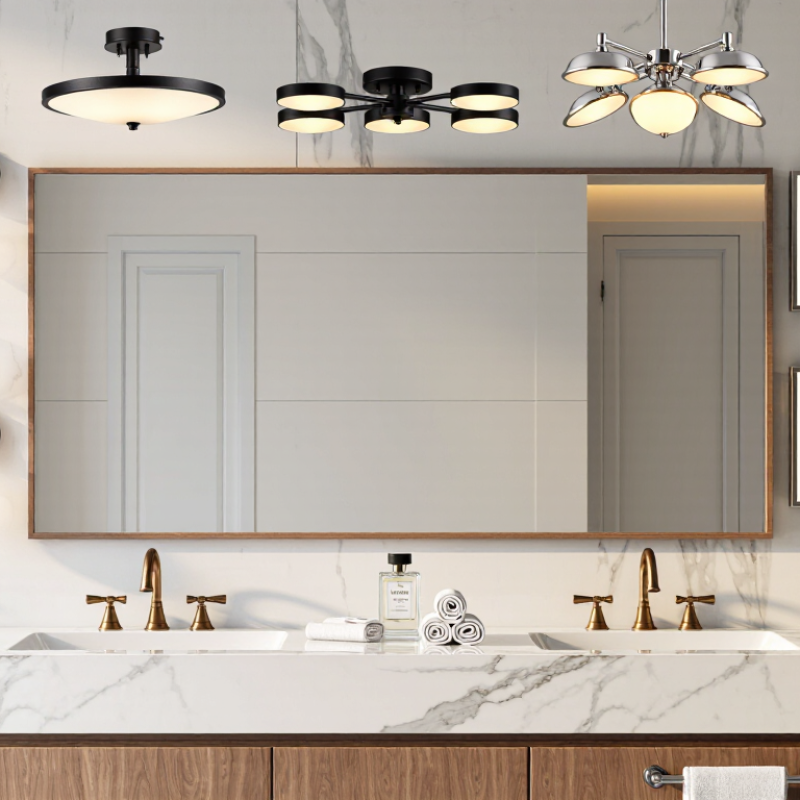
Hotel vanity lights must support grooming, cleaning, photography, and comfortable guest use. Their functions differ sharply, even when their shapes look similar.
Vertical wall sconces place light beside the face. They reduce shadows around the nose and eyes. Horizontal bars spread light across wider mirrors. They suit family bathrooms and accessible rooms.
Above-mirror fixtures save wall space, but they can create darker eye sockets. Backlit mirrors deliver soft, decorative illumination. They may need separate task lighting for shaving or makeup.
Integrated LED models offer slim profiles and stable output. Replaceable-lamp models simplify future maintenance. This practical difference matters across global hotel projects.
The U.S. Department of Energy reports that laboratory LED packages have exceeded 200 lumens per watt. However, real fixtures perform lower because of optics, drivers, and heat. ENERGY STAR states that LEDs use at least 75% less energy than incandescent lighting and last up to 25 times longer.
Select 90+ CRI for more accurate skin tones. Use 2700–3000K for a warm hospitality mood, or 3500K for clearer grooming. IP44 protection is a sensible baseline near bathroom splashes, though local codes still control installation.
Tips:
Check the fixture’s delivered lumens, not only wattage. Ask for TM-30 data when color quality matters. Review glare from the guest’s eye level. A beautiful fitting can still feel harsh. I have seen specifications overlook driver replacement, which becomes costly after repeated daily use. Be cautious.
Top 10 Hotel Bathroom Vanity Lights for Global Buyers
Comparing the top ten vanity lights requires more than checking price and appearance. Light output should support grooming without creating harsh shadows around the eyes or chin. Measure illumination at the mirror, not only from the product box. A balanced design often performs better than the brightest fixture.
Color quality deserves close attention. Choose a high color rendering index, preferably 90 or above, so skin tones and fabric colors appear natural. Adjustable color temperature can suit different hotel interiors, but simple controls may reduce maintenance issues. Check for visible flicker through a phone camera and during dimming. Flicker is easy to overlook.
Moisture protection is essential in humid bathrooms. Confirm the appropriate ingress protection rating for the installation location and local electrical requirements. Look closely at sealed joints, corrosion-resistant finishes, and easy-clean surfaces. A fixture with exposed grooves may collect soap residue quickly. Installation time also matters, especially when many rooms share the same layout. Review mounting hardware, wiring access, replacement parts, warranty terms, and energy use. These details influence long-term operating cost.
A high lumen rating can mislead. Glare still ruins the mirror experience. No ranking is perfect. Test samples under real bathroom conditions before ordering in volume. A slightly less decorative light may prove more reliable after months of cleaning, humidity, and daily guest use.
Choosing vanity lights for international hotels requires more than attractive brightness. Bathroom moisture changes the safety calculation. In project reviews, I check the luminaire’s IP rating, grounding method, driver enclosure, and installation zone. IEC 60529 defines IP protection levels, but local codes may demand higher protection near showers and bathtubs. IP44 is not automatically acceptable everywhere.
Electrical compatibility must be verified country by country. Confirm voltage, frequency, power factor, dimming behavior, and emergency operation before ordering. Products should be tested against relevant IEC 60598 requirements, while North American projects commonly request UL or CSA certification. European installations may also require CE compliance, electromagnetic compatibility testing, and Low Voltage Directive conformity. Certificates alone are not enough. Check the exact model number, test scope, and production address.
Energy performance matters in a hotel that operates every day. The International Energy Agency reports that lighting represents about 15% of global electricity consumption. Efficient LEDs can reduce operating demand, but poor heat management may shorten their service life. Look for verified lumen maintenance, low standby power, and replaceable drivers where practical. A 2024 report from the U.S. Department of Energy also emphasizes quality controls for LED reliability. I still find one weak point: buyers often compare only wattage. Humidity, glare, color consistency, and maintenance access deserve equal attention. Small oversights become expensive in 24-hour bathrooms.
This chart compares nominal residential supply voltage and frequency across ten major hotel-buying markets. Product specifications should match the installation country, while bathroom-zone protection, grounding, leakage protection, and ingress protection must be verified under applicable local electrical codes. Common market-access systems include CE in the European Union, UKCA in the United Kingdom, UL or CSA approval systems in North America, RCM in Australia and New Zealand, CCC in China, PSE in Japan, NOM in Mexico, INMETRO in Brazil, and BIS requirements in India. Certification scope varies by product type and installation method.
Reference framework: IEC 60038 for standard supply voltages and IEC 60529 for IP protection ratings. Japan uses 50 Hz in eastern regions and 60 Hz in western regions; Brazil commonly uses both 127 V and 220 V systems.
Hotel vanity lighting must serve grooming, cleaning, and atmosphere. The right fixture depends on bathroom size, mirror width, ceiling height, and guest routines. For compact rooms, place two vertical fixtures beside the mirror. This reduces nose and eye shadows better than one overhead fitting. Larger bathrooms can add a linear fixture above the mirror, but it should not replace side lighting. Keep light close to face level, usually 150–170 cm above the finished floor. Confirm local electrical and wet-area requirements before specifying anything.
Match the color temperature to the design. Warm 2700–3000K suits stone, wood, and relaxed guestrooms. Neutral 3500–4000K supports crisp, contemporary interiors. Select CRI 90 or higher when accurate skin and tile colors matter.
A diffuser should soften glare without making the mirror look dim. Consider IP44 or higher where splash exposure requires it, subject to local codes. In practice, frosted lenses often feel more comfortable than exposed light points.
Usage should guide the top ten shortlist. Choose dimming when one bathroom serves morning grooming and late-night visits. Add occupancy controls carefully; sudden light can disturb sleeping guests. The U.S. Energy Information Administration’s 2018 Commercial Buildings Energy Consumption Survey reports that lighting represented 17% of commercial building energy use. The U.S. Department of Energy states that LED lighting can use at least 75% less energy and last up to 25 times longer than incandescent lighting.
Efficiency alone is not enough. A beautiful fixture can fail through glare, difficult maintenance, or poor color consistency. I would test a sample at mirror height before approving a full hotel order. That small step is easy to skip.
Hotel vanity lighting should support accurate grooming, safe movement, and a calm guest experience. I have found that balanced light matters more than impressive decoration. Select fixtures with high color rendering, controlled glare, and a suitable color temperature for the bathroom’s interior. Warm light feels comfortable, but overly warm light can distort skin tones. Check the voltage, frequency, socket type, and required certifications before ordering internationally. Local electrical codes still apply.
Installation needs careful planning. Position lights beside the mirror when possible, because overhead lighting can create shadows under the eyes and chin. Measure the wall space, mirror width, and cable location before purchase. A damp-rated fixture is essential, but the exact rating depends on its distance from water sources. Use a qualified electrician for fixed wiring and confirm grounding requirements. Small errors here can create expensive delays. I once underestimated backplate depth; the installation looked simple, but the junction box needed adjustment.
Tips: Keep spare bulbs or compatible components available. Clean the diffuser with a soft, dry cloth. Avoid abrasive chemicals, steam buildup, and wet hands during maintenance. Inspect loose fittings, flickering, discoloration, or unusual heat every few months. Record the installation date and electrical specifications for future replacements. Maintenance schedules are easy to overlook, especially in busy hotels.
Choose a damp-rated fixture suitable for its distance from water. IP44 may work in some areas, but local codes can require more protection. Never assume one rating fits every bathroom.
Confirm voltage, frequency, power factor, dimming behavior, and emergency operation. Check the socket type and grounding method. A matching label does not prove full compatibility.
Match the certificate to the exact model number, test scope, and production address. Confirm required local approvals before ordering. Certificates alone are not enough.
Place two vertical fixtures beside the mirror when possible. Keep light near face level, around 150–170 centimeters above the floor. One ceiling light can create shadows under the eyes and chin.
Warm 2700–3000K suits stone, wood, and relaxed interiors. Neutral 3500–4000K supports a cleaner, modern appearance. Very warm light may distort skin tones.
Choose a color rendering value of 90 or higher for accurate skin and tile colors. Use a diffuser to soften glare. Exposed light points can feel harsh beside a mirror.
Dimming supports bright morning grooming and quieter late-night visits. Occupancy sensors need careful settings. Sudden brightness may disturb sleeping guests. Efficiency is not the whole answer.
Select efficient LEDs with verified lumen maintenance and low standby power. Replaceable drivers can simplify future repairs. Keep compatible spare components available. I still worry about heat management.
Clean diffusers with a soft, dry cloth. Avoid abrasive chemicals, steam buildup, and wet hands. Inspect flickering, loose fittings, discoloration, and unusual heat every few months. Small faults are easy to miss.
Yes, test one fixture at mirror height first. Check glare, shadows, color consistency, heat, and installation depth. I once underestimated the backplate depth. A small sample could have prevented that delay.
Choosing the right hotel bathroom vanity lights requires balancing visual appeal, safety, durability, and operational efficiency. This guide compares major light types, including wall-mounted, mirror-integrated, linear, and adjustable designs, explaining how each supports different bathroom layouts and guest needs. It also examines key performance factors such as brightness, color temperature, glare control, energy efficiency, moisture resistance, lifespan, and ease of cleaning. For global buyers, understanding regional electrical standards, protection ratings, testing requirements, and certification documentation is essential before purchase.
The article also explains how to coordinate hotel bathroom vanity lights with interior styles, mirror sizes, ceiling heights, and daily usage patterns. Practical advice covers product selection, quantity planning, wiring preparation, professional installation, replacement access, and routine maintenance. By evaluating both design compatibility and long-term operating costs, hotel owners, designers, and procurement teams can choose reliable lighting solutions that improve guest comfort, support safe operation, and maintain a polished bathroom environment across different hotel projects.