
0%

Choosing the right hospitality lighted mirrors can transform a hotel bathroom from functional to memorable. Guests notice lighting, reflections, and finishing details within seconds. A softly illuminated mirror can make morning routines feel calmer and more refined.

For hotels and resorts, performance matters as much as appearance. Reliable LED lighting should provide even facial illumination without harsh shadows. High color-rendering technology helps guests apply makeup, shave, or prepare for meetings accurately. Moisture-resistant construction is essential in steamy bathrooms. Touch controls, anti-fog features, and adjustable brightness can also improve daily usability. Small details matter.

Installation quality deserves equal attention. A beautiful mirror may disappoint if its light flickers, the switch feels unreliable, or cleaning leaves visible streaks. Hospitality teams should assess durability, energy efficiency, warranty coverage, and replacement support before purchasing. Feedback from housekeeping staff can reveal practical problems that product photos hide. That perspective is often overlooked.

This guide examines leading hospitality lighted mirrors for hotels and resorts. It considers design, illumination, maintenance, safety, and guest experience. The best option is not always the most expensive model. Sometimes, a simpler mirror performs better over years of frequent use. No product is perfect. Humidity, heavy cleaning schedules, and changing guest preferences can expose weaknesses. Careful comparison remains necessary. Clear specifications and verified supplier experience offer stronger confidence than attractive marketing alone.
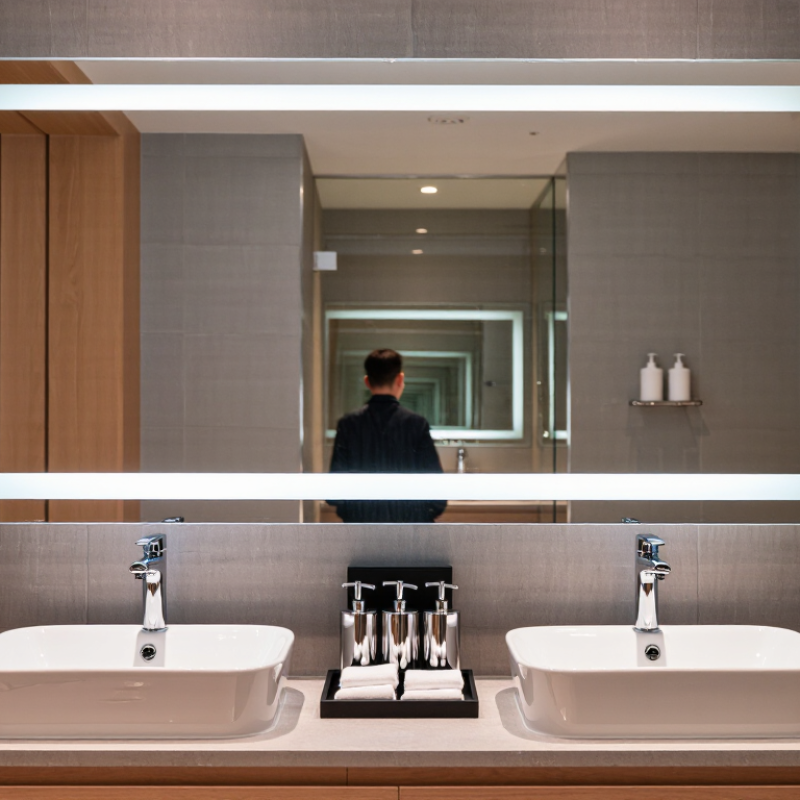
Top Hospitality Lighted Mirrors for Hotels and Resorts

Types of Lighted Mirrors Used in Hotels and Resorts

Top Hospitality Lighted Mirrors for Hotels and Resorts

Hotels and resorts use several types of lighted mirrors for bathrooms, dressing areas, and guest suites. Each type creates a different visual experience.

Backlit mirrors release a soft glow from behind the glass. They produce gentle wall illumination and suit calm, spa-inspired bathrooms. Front-lit mirrors place LEDs around the reflective surface. This design gives clearer facial lighting for shaving, makeup, and skincare. Edge-lit mirrors direct light through the glass edges. They look slim and modern, but their brightness can feel limited in larger bathrooms.

Some hospitality mirrors include built-in demisting pads. These prevent steam from covering the center after a hot shower. This small feature saves guests from wiping the glass with a towel.

Adjustable color temperature is also valuable. Warm light feels comfortable at night, while neutral white light supports detailed grooming. High color-rendering LEDs help guests see natural skin tones more accurately.

Not every bright mirror feels luxurious. Glare can quickly ruin the experience. Some installations disappoint. Poorly positioned LEDs may create shadows under the eyes or chin. In practical projects, designers should check light distribution from a standing guest’s height. Moisture-rated components, concealed wiring, and easy-clean surfaces also matter. A beautiful mirror still needs dependable performance after repeated daily use. That is where specifications deserve more attention than appearance.

Key Features That Define High-Quality Hospitality Mirrors

Top Hospitality Lighted Mirrors for Hotels and Resorts

Key Features That Define High-Quality Hospitality Mirrors

A high-quality hospitality mirror should deliver accurate light, safe operation, and dependable performance. The U.S. Department of Energy reports that LED lighting uses at least 75% less energy than incandescent lighting and can last up to 25 times longer. For hotel bathrooms, this supports lower maintenance and fewer room interruptions. Choose LEDs with a high color rendering index, ideally CRI 90 or above. IES TM-30 testing can reveal color quality more clearly than CRI alone. Skin tones should look natural, not pale or green.

Moisture protection matters just as much. Select sealed electrical components and an appropriate IP rating for bathroom conditions. A heated anti-fog panel keeps the glass usable after a hot shower. Safety backing, rounded edges, and concealed wiring also reduce practical risks. In real installations, even excellent mirrors can disappoint when switches sit too far away or the light feels harsh. That detail deserves more attention. Brightness adjustment and warm-to-neutral color control improve comfort during both morning grooming and evening use. However, more features can create more service points, so simplicity still has value.

Tips: Test one installed sample at night. Check facial shadows, glare, steam clearance, and switch access. Review the warranty, cleaning instructions, and replacement process before approving a large order.

How to Select Mirrors for Guest Rooms and Public Spaces

Top Hospitality Lighted Mirrors for Hotels and Resorts

How to Select Mirrors for Guest Rooms and Public Spaces

Selecting a lighted mirror begins with the guest’s routine, not the frame style. In guest rooms, choose even vertical illumination around the face. A 90-plus CRI rating helps guests judge makeup, shaving, and skin tone accurately. A 3000K to 3500K color temperature usually feels comfortable without making the room appear clinical. Add touch-free controls where possible. Wet fingers and small switches are a poor combination.

Public spaces need a different specification. Lobby and restroom mirrors face heavier use, frequent cleaning, and longer operating hours. The U.S. Department of Energy reports that LED lighting uses at least 75% less energy than incandescent lighting and lasts up to 25 times longer. Therefore, efficient LEDs can reduce replacement work across a large property. Select sealed electrical components and an appropriate IP rating for humid bathrooms. Anti-fog heating also prevents guests from wiping the glass with towels, though it adds energy demand.

Maintenance data should influence the final choice. The ENERGY STAR Commercial Food Service and Hospitality guidance stresses efficient equipment, controls, and operational planning as part of building energy management. Use dimming schedules in corridors and public washrooms, but confirm that lower output still supports safe grooming. Test one installed mirror at eye level before ordering hundreds. We often overlook that detail. Glare, slow defogging, or an awkward switch can remain obvious long after installation. Accessibility also deserves review, including mounting height, clear approach space, and reachable controls.

Installation, Safety, and Maintenance Requirements

Top Hospitality Lighted Mirrors for Hotels and Resorts

Installation, Safety, and Maintenance Requirements

A lighted mirror needs more than an attractive position above the basin. Before installation, confirm the wall structure, electrical route, and bathroom moisture levels. A qualified electrician should connect the unit and verify grounding, isolation, and protection against water exposure. Local electrical requirements must guide every decision. Do not rely on appearance alone.

In hotel bathrooms, clearance matters. Keep switches and connections away from splash zones whenever possible. Seal wall openings carefully, but avoid trapping moisture behind the mirror.

I once underestimated the effect of steam on a poorly ventilated bathroom. The mirror looked fine at installation, yet condensation later reached hidden fittings. Ventilation should be checked before the final fixing.

Maintenance teams should inspect cables, mounting points, seals, and light performance during scheduled room checks. Clean the glass with a soft cloth and a non-abrasive solution. Spray the cloth, not the mirror. Harsh chemicals may damage coatings and electrical edges. Check for flickering, warm spots, loose brackets, or discolouration. Small changes deserve attention.

Replacement parts should match the original electrical specifications. Staff should never open powered components during routine cleaning. Record inspections with dates and clear observations. This creates useful evidence when faults appear repeatedly.

Some maintenance plans still focus only on visible marks. That is not enough. Hidden moisture and loose fixings can become expensive problems.

Comparing Leading Lighted Mirror Options for Hospitality Projects

Top Hospitality Lighted Mirrors for Hotels and Resorts

Comparing leading lighted mirror options requires more than judging brightness. Front-lit mirrors project light across the face, helping guests shave or apply makeup accurately. Backlit models create a softer halo and a more refined bathroom atmosphere. Edge-lit designs usually offer a slimmer profile, but their illumination may feel less even around wide mirrors. For guest bathrooms, 3000K to 4000K light often balances comfort and color accuracy. A brighter setting can look impressive, yet it may feel harsh at night.

Project conditions matter just as much. In a humid resort bathroom, built-in demisting technology can reduce waiting time after a hot shower. However, performance depends on correct installation and ventilation. Look for moisture-resistant construction, tested electrical components, and accessible service points. A concealed cable looks cleaner, but repairs become harder when the wall structure is too compact. This detail is easy to overlook. It should not be.

Tips: Compare illumination at eye level, not from a showroom wall. Check the mirror at night. Ask for photometric data, warranty terms, cleaning guidance, and replacement procedures. Confirm whether the switch, sensor, and dimming system match the hotel’s electrical plan. A mirror can be beautiful and still create maintenance work. Evaluate both impressions and long-term use.

FAQS

What makes a hospitality mirror high quality?

It should provide accurate light, safe operation, and reliable long-term performance. Natural skin tones matter. So does easy maintenance.

Why is LED lighting suitable for hotel bathrooms?

LED lighting uses less energy and usually lasts longer than incandescent lighting. This can reduce replacements and room interruptions. Test actual brightness before approval.

What color quality should a lighted mirror provide?

Choose lighting with a CRI of 90 or above. Skin should look natural, not pale or green. CRI alone may not show every color weakness.

How can a mirror remain safe in a humid bathroom?

Select sealed electrical components and a suitable IP rating. Safety backing, rounded edges, and concealed wiring add protection. Proper installation still matters.

Does an anti-fog function help hotel guests?

A heated anti-fog panel keeps the glass usable after a hot shower. Guests avoid wiping steam with towels. It also adds energy use and another service point.

Which lighting style works best for guest bathrooms?

Front lighting usually supports shaving and makeup more evenly. Backlighting creates a softer halo. Edge lighting looks slim, but wide mirrors may appear less even.

What color temperature feels comfortable for guests?

A range of 3000K to 3500K often feels warm and comfortable. Some spaces may suit up to 4000K. Very bright light can feel harsh at night.

What should be tested before ordering many mirrors?

Install one sample at eye level and test it at night. Check shadows, glare, steam clearance, and switch access. Small details become large problems later.

How should public-space mirrors differ from guest-room mirrors?

Public mirrors face heavier use, frequent cleaning, and longer operating hours. Choose durable surfaces, sealed components, and accessible service points. A refined appearance is not enough.

Which maintenance details deserve attention?

Review cleaning instructions, warranty coverage, and replacement procedures. Confirm that wiring and controls remain serviceable. More features are not always better.

Conclusion

Hospitality lighted mirrors play an important role in improving guest comfort, visual appeal, and everyday functionality in hotels and resorts. Common options include backlit, front-lit, LED edge-lit, and anti-fog mirrors, each suited to different room styles and lighting needs. High-quality models should provide balanced illumination, accurate color rendering, energy efficiency, durable materials, moisture resistance, and convenient controls. Selecting the right mirror depends on its location, including guest bathrooms, bedrooms, dressing areas, lobbies, and other public spaces, while also considering size, design, brightness, and overall interior coordination.

Successful installation requires secure mounting, appropriate electrical connections, suitable placement, and compliance with local safety standards. Easy-clean surfaces, reliable lighting components, and accessible replacement parts can simplify long-term maintenance. When comparing hospitality mirror options, project teams should evaluate construction quality, lighting performance, safety features, customization possibilities, installation requirements, warranty support, and total ownership cost. A well-chosen mirror can enhance the guest experience while supporting a polished, consistent, and practical hospitality environment.

Maris

Maris

Maris is a professional marketing specialist dedicated to helping businesses understand innovative products, market trends, and practical solutions. With a strong knowledge of the company’s product portfolio, Maris transforms complex information into clear, useful, and engaging content for......