
0%

Finding China’s best hospitality wall sconces requires more than comparing product photos and factory prices. A convincing choice must balance visual character, guest comfort, durability, and dependable manufacturing. In a hotel corridor, warm light should guide guests without creating sharp glare. In a restaurant, the fixture must flatter tables, textures, and faces. Small details matter, including shade depth, metal finishing, mounting stability, and accessible replacement parts.

Lighting designer Randall Whitehead has said, “Lighting is the jewelry of architecture.” His observation fits hospitality wall sconces especially well. These fixtures are functional, yet they also shape the atmosphere guests remember. A brushed brass sconce can make a narrow hallway feel refined. A poorly finished one may reveal fingerprints, uneven color, or weak wiring within months.

Reliable Chinese suppliers usually provide clear photometric data, material specifications, sample services, and consistent quality inspections. Buyers should ask about LED color temperature, color rendering, dimming compatibility, ingress protection, and testing documentation. Factory visits or independent inspections can add valuable confidence. Still, no supplier is perfect. Samples may look stronger than mass production, and attractive catalogs can hide practical weaknesses.

This guide explores where to buy China best hospitality wall sconces, including specialized manufacturers, sourcing platforms, and verified lighting distributors. It also considers communication speed, customization capability, packaging quality, and after-sales support. The cheapest quotation may not be the best value. Sometimes, paying slightly more prevents costly replacements, delayed openings, and disappointed guests.
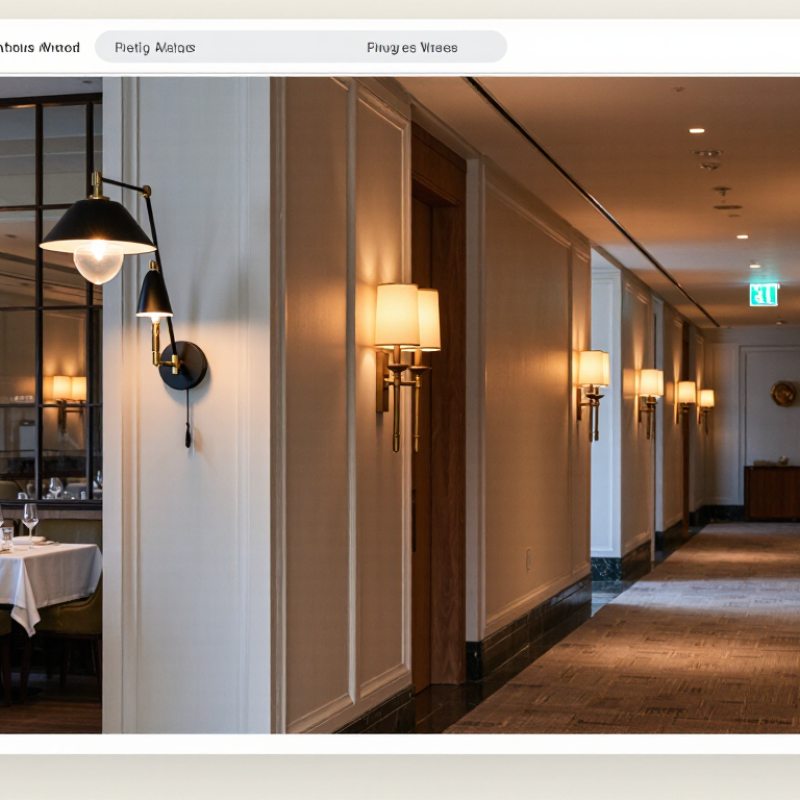
Where to Buy China Best Hospitality Wall Sconces?

What Defines the Best Hospitality Wall Sconces from China?

The best hospitality wall sconces from China are defined by more than attractive design. They must support comfort, durability, safety, and consistent performance in demanding guest spaces. In hotel corridors, a warm 2700K–3000K light can create a calm atmosphere without producing harsh glare. A high color rendering index also helps wall finishes, artwork, and fabrics appear more natural.

Reliable suppliers provide detailed specifications before discussing price. Look for photometric files, material descriptions, installation drawings, and test reports. Aluminum bodies, tempered glass, and corrosion-resistant finishes usually perform better in humid areas. Check the ingress protection rating when sconces will be installed near bathrooms, spas, or outdoor entrances. Small details matter. A loose mounting plate can create service problems months later.

Practical sourcing experience shows that samples are essential. Ask for a finished sample, wiring information, packaging photos, and a clear production schedule. Factory audits can reveal whether quality control is documented or only promised. Still, a polished sample may hide inconsistent color batches or weak internal components. That deserves closer inspection. Suppliers should explain warranty terms, replacement parts, and inspection procedures in plain language. I have seen attractive fixtures fail because the driver was overlooked. The design was excellent. The engineering was not. Price matters, but stable performance, transparent communication, and verified production capacity define a truly dependable hospitality wall sconce.

How to Evaluate Quality, Design, and Safety Standards

For hospitality wall sconces, evaluate the hardware before falling for the finish. Ask for material specifications, coating details, and photos of joints, welds, and wiring connections. A thin backplate may flex when installers tighten it. That detail is easy to miss in a polished product photo. Check whether the light source and driver can be replaced, and request dimming and flicker test results. The U.S. Energy Information Administration’s 2018 Commercial Buildings Energy Consumption Survey found that lighting used about 10% of commercial building energy. Efficient LEDs can help, but only when their light quality suits the room.

Design should support the guest experience, not merely match a mood board. Compare the sconce’s beam spread, color temperature, and glare from a seated position. A bright exposed lamp beside a bed can feel harsh. Ask for a sample and test it against the actual wall finish; renderings often soften glare. For safety, request test documentation to the applicable luminaire standard, such as IEC 60598-1, and confirm suitability for the installation location. Damp areas need appropriately rated fixtures. Check grounding, wire strain relief, driver temperature, and mounting instructions. A certificate alone is not enough; verify the model number matches the tested product. That step takes time, but skipping it can leave an attractive fixture with unanswered questions.

Where to Buy China Best Hospitality Wall Sconces? - How to Evaluate Quality, Design, and Safety Standards

Use this practical comparison framework to evaluate hospitality wall sconces from China. The benchmarks below are procurement guidelines and should be verified against the project location, applicable regulations, approved samples, and independent test documentation.

Evaluation Dimension Recommended Benchmark What to Inspect in the Product Documents or Evidence to Request Why It Matters in Hospitality Projects
Applicable Safety Standard IEC 60598-1 for general luminaire safety, plus the relevant product-specific part such as IEC 60598-2-1 for fixed general-purpose luminaires. Check electrical construction, insulation, earthing, creepage distances, strain relief, temperature rise, and mechanical protection. Current test report from an accredited laboratory, certificate of conformity, and technical construction file. Confirms that the luminaire has been assessed against recognized electrical and mechanical safety requirements.
Destination-Market Compliance Use the regulatory route required in the destination market: CE-related documentation for the European Economic Area, or applicable North American requirements such as UL 1598 or equivalent certification where specified. Verify that the marking, rated voltage, installation instructions, and certification scope match the supplied model. Declaration of Conformity, certification listing, label artwork, and model-specific test reports. Reduces customs, inspection, insurance, and project approval risks.
Input Voltage and Frequency Select 220–240 V, 50/60 Hz for many international projects, or 120 V, 60 Hz for locations using North American supply. Confirm before ordering. Compare the nameplate rating with the hotel’s electrical system. Check terminal blocks, drivers, and internal wiring. Electrical specification sheet, driver datasheet, and sample nameplate photograph. Incorrect voltage compatibility can cause premature failure, overheating, or unsafe operation.
Ingress Protection IP20 is generally suitable for dry indoor guestrooms and corridors; IP44 or higher is commonly considered for splash-prone hospitality areas, subject to local requirements. Inspect seals, cable entries, glass joints, and the enclosure design. Confirm that the IP rating applies to the complete installed luminaire. IP test report and installation drawing showing the tested configuration. Appropriate protection helps prevent moisture-related damage in bathrooms, spas, restaurants, and exterior-adjacent areas.
Light Quality CRI or Ra of 80 minimum for general hospitality lighting; CRI 90 or higher is preferable where skin tones, artwork, food, or premium finishes must be rendered accurately. Review the LED spectral performance and compare the approved sample with the photometric data. LM-79 or equivalent photometric report, color-rendering data, and sample approval record. Good color rendering supports guest comfort, interior appearance, food presentation, and photography.
Color Temperature 2700–3000 K is widely used for warm, residential-style guestrooms and lounges; 3000–3500 K may suit brighter corridors, public areas, or task-oriented spaces. Check the actual measured CCT, color consistency, and whether the product offers fixed or selectable CCT. Photometric report, color-tolerance data, and approved production sample. Consistent warm light supports a welcoming atmosphere and helps maintain a coherent interior design scheme.
Color Consistency LEDs within a maximum 3-step MacAdam ellipse are preferred for visible architectural applications; tighter tolerances may be specified for high-end projects. Compare multiple samples for visible differences in tint or brightness, especially when fixtures are installed close together. LED binning statement, color-tolerance specification, and batch inspection records. Minimizes noticeable variation across rooms, corridors, and repeated wall installations.
Energy Performance For integrated LED wall sconces, review delivered luminaire efficacy rather than LED-chip efficacy alone; a practical project target is often about 70–100 lm/W, depending on style and optical design. Check total system wattage, delivered lumens, driver losses, dimming behavior, and standby power where relevant. LM-79 or equivalent report showing total luminaire watts and lumens, plus driver specifications. Higher system efficiency can reduce operating costs while supporting energy-certification targets.
LED and Driver Lifetime Prefer published LED maintenance data such as L70 at 50,000 hours or more, with the driver lifetime and operating conditions clearly stated. Inspect thermal management, driver ventilation, component temperature ratings, and replaceability where maintenance access is limited. IES LM-80/TM-21 data where available, driver datasheet, lifetime calculation, and warranty terms. Long service life reduces room downtime, replacement labor, and maintenance disruption.
Dimming and Controls Specify the required protocol before production, such as phase-cut, 0–10 V, DALI, or a compatible hotel control system. Test minimum dimming level, flicker, start-up behavior, noise, and compatibility with the actual control equipment. Dimming compatibility list, driver datasheet, and witnessed system test using the intended control device. Prevents flicker, buzzing, inconsistent dimming, and commissioning delays.
Flicker Performance Request measured flicker data and select a low-flicker driver, especially for guestroom video calls, wellness spaces, and areas captured by cameras. Test at full and reduced output levels, including the lowest stable dimming setting. Flicker measurement report showing relevant modulation or percent-flicker results. Lower flicker risk improves visual comfort and reduces problems in camera-recorded environments.
Materials and Finish Use appropriately treated steel, aluminum, brass, glass, or other specified materials with a consistent finish and suitable corrosion resistance for the installation environment. Inspect wall thickness, welds, plating or powder coating, sharp edges, glass quality, and finish consistency under project lighting. Material declaration, finish specification, coating test data where required, and approved color sample. Durable materials preserve appearance in high-touch, high-traffic, and frequently cleaned areas.
Thermal and Fire Safety The product should meet the applicable temperature, flammability, and abnormal-operation requirements of the selected safety standard. Check maximum surface temperature, driver enclosure, heat-sink contact, combustible-material separation, and mounting clearances. Temperature-rise test, flammability information, installation instructions, and abnormal-operation test results. Controls fire and burn risks, particularly in compact guestrooms and areas accessible to guests.
Installation and Maintenance Provide clear mounting instructions, accessible terminals, secure wall fixing, replaceable components where feasible, and spare parts for critical items. Review the backplate, anchors, cable routing, mounting template, driver access, and cleaning instructions. Dimensioned installation manual, exploded parts diagram, spare-parts list, and pilot-installation feedback. Simple installation reduces labor time and makes future maintenance safer and faster.
Quality Control and Sampling Require a pre-production sample, first-article approval, production inspection, and functional testing of every finished luminaire or an agreed sampling plan. Check light output, color, finish, dimensions, wiring, grounding, insulation, packaging, and accessories against the approved sample. Inspection checklist, test records, production photographs, nonconformance procedure, and retained sample policy. Helps prevent inconsistent batches and costly corrections after delivery to the hotel site.
Warranty and Traceability Obtain written warranty coverage, normally with clearly defined duration, exclusions, claim process, and replacement obligations. Verify serial or batch identification, production date, component traceability, and availability of replacement drivers, LEDs, glass, and hardware. Warranty document, batch-label format, service procedure, and spare-parts commitment. Traceability supports reliable after-sales service across multi-room and multi-property projects.
Packaging and Transport Protection Use protective internal cushioning, moisture-resistant outer cartons where appropriate, clear carton markings, and packaging tested for the intended shipping method. Inspect protection for glass, protruding finishes, diffusers, drivers, and mounting hardware. Confirm carton dimensions and gross weight. Packaging specification, drop-test or transport-test record where available, packing list, and loading photographs. Reduces breakage, surface damage, missing parts, and installation delays after international transport.

Note: Standards, certifications, voltage requirements, emergency-lighting rules, fire regulations, and installation codes vary by destination and project type. Confirm the final specification with the project consultant, local authority, and a qualified electrical professional before purchase.

Where to Find Reliable Chinese Wall Sconce Manufacturers

Reliable Chinese wall sconce manufacturers are easier to find when you judge factories, not glossy catalogs. In hospitality projects, I look for makers with a visible workshop, stable engineering team, and clear export records. Ask for production photos, material specifications, and a sample made from the same components as the final order. A polished sample can hide weak wiring. That happened on one project.

Request evidence for every critical detail. Confirm the metal grade, coating process, lamp-holder specification, LED driver source, and applicable safety documentation. For bathrooms or coastal properties, check the stated IP rating and corrosion testing. A dependable manufacturer should explain tolerances, inspection points, and replacement procedures without vague promises. Arrange a video factory tour, then compare it with an independent pre-shipment inspection. Communication matters too. Slow replies often become slower problem solving.

Before signing, review the quotation line by line. It should show tooling fees, packaging, lead time, spare parts, and payment stages. Test several samples under repeated switching, heat, and surface-cleaning conditions. Request a small pilot order. A factory may perform well on ten pieces but struggle with two hundred. My own mistake was trusting a beautiful finish before checking carton protection. The sconces arrived usable, but several shades were scratched. Reliable sourcing needs evidence, patience, and room to question your first impression.

How to Compare Suppliers, Prices, and Customization Services

Where to Buy China Best Hospitality Wall Sconces?

In hospitality projects, supplier comparison should begin with product evidence, not attractive photographs. Ask for material samples, wiring details, photometric data, and testing documents. A reliable manufacturer should explain performance clearly and answer technical questions without vague promises. Review factory experience with hotels, restaurants, and public areas. Project photos help, but dated production records are more convincing. I once trusted polished images too quickly. The finish looked different under warm lobby lighting.

Price comparisons require more than unit cost. Check minimum order quantities, sample charges, packaging, shipping, installation parts, and warranty terms. Request the same specification from several suppliers. Compare brass thickness, coating quality, LED efficiency, color temperature, and replacement access. A cheaper sconce may require more maintenance later. Lead time also matters during renovation. Delays can affect electricians, room openings, and final inspections. I still find price tables imperfect, because suppliers sometimes calculate freight differently. Ask for a written, itemized quotation.

Tips: Send one detailed specification sheet to every supplier. Include dimensions, finish, lamp color, mounting method, and estimated quantity. For customization, request a drawing before production. Confirm prototype approval, revision limits, tooling costs, and ownership of design files. Test one sample in a realistic room. Check shadows, glare, heat, and cleaning convenience. Keep communication records. Small misunderstandings become expensive changes.

Where to Buy China’s Best Hospitality Wall Sconces?

Compare common supplier types by price competitiveness, customization capability, minimum order quantity, and typical production lead time. Scores are based on practical hospitality lighting procurement benchmarks.

Higher scores indicate stronger performance. Price competitiveness reflects typical factory quotation levels, while customization scores consider finish, dimensions, light source, color temperature, certifications, and project-specific packaging.

What to Check Before Ordering Hospitality Wall Sconces in Bulk

Where to Buy China Best Hospitality Wall Sconces?

Before ordering hospitality wall sconces in bulk, verify performance before negotiating price. In project procurement, small lighting errors can multiply across hundreds of rooms. Request a working sample, photometric file, wiring diagram, and installation dimensions. Check the actual color temperature under a guestroom lamp, not only in a bright showroom.

Energy efficiency deserves careful attention. The International Energy Agency reports that lighting uses about 15% of global electricity. Ask for tested wattage, lumen output, power factor, and expected LED lifetime. A high CRI, preferably 90 or above, helps skin tones and finishes appear natural. Confirm whether the driver supports your dimming system. Compatibility problems are expensive.

Safety and consistency matter more than attractive photographs. Review applicable IEC or local electrical test reports, material certificates, IP ratings, and thermal performance. For bathrooms or outdoor corridors, moisture protection must match the installation area. Check production samples from different batches. Finish color can drift. It happens. Confirm carton protection, spare parts, warranty terms, and replacement availability in writing. The U.S. Department of Energy notes that LED performance depends on thermal management and driver quality, so do not judge fixtures by chips alone. Factory audits, random inspections, and a small pilot order reduce risk, although they cannot remove every uncertainty.

FAQS

What makes a hospitality wall sconce suitable for guest spaces?

It should provide comfortable light, durable construction, and dependable performance. Warm 2700K–3000K lighting can soften a hotel corridor without harsh glare.

Which materials work well in humid areas?

Aluminum bodies, tempered glass, and corrosion-resistant finishes are practical choices. Check the fixture’s ingress protection rating near bathrooms, spas, or outdoor entrances.

What should I request before comparing supplier prices?

Ask for photometric files, material details, installation drawings, test reports, and warranty terms. Clear documentation matters more than a polished catalog.

Why should I inspect a finished sample?

A sample lets you examine wiring, finish, mounting plates, and packaging. Still, one attractive sample may not reveal inconsistent production batches.

How can I check a manufacturer’s production quality?

Request workshop photos or a video tour, then consider an independent pre-shipment inspection. Compare documented procedures with what you can actually verify.

What details should a quotation include?

It should list tooling fees, packaging, lead time, spare parts, and payment stages. Vague terms can cause avoidable delays.

How can I test a sconce before placing a large order?

Try repeated switching, check heat, and clean the surface as expected in daily use. A small pilot order can expose issues early.

What is easy to overlook when checking a fixture?

The LED driver, replacement parts, and carton protection deserve attention. I once focused on the finish and missed weak packaging. The shades arrived scratched.

Conclusion

Finding the best hospitality wall sconces from China requires more than comparing attractive designs and low prices. The ideal products should combine durable materials, consistent workmanship, efficient lighting performance, and styles suited to hotels, restaurants, resorts, and other guest-focused environments. Buyers should evaluate certifications, electrical safety, heat management, installation structure, and quality-control procedures to ensure the fixtures are reliable for long-term commercial use.

Reliable Chinese manufacturers can be located through professional sourcing platforms, trade exhibitions, factory audits, and verified supplier directories. When comparing suppliers, consider production capacity, minimum order quantities, sample policies, lead times, packaging, pricing transparency, and customization services such as finishes, dimensions, light color, and mounting options. Before placing a bulk order, request samples, confirm technical specifications, review inspection procedures, clarify warranty and after-sales support, and approve a detailed contract. These steps help buyers balance design, safety, quality, and total cost while selecting hospitality wall sconces that meet each project’s practical and aesthetic requirements.

Clara

Clara

Clara is a dedicated marketing professional with extensive experience in developing clear, valuable, and engaging content for modern businesses. As a key member of our team, she combines market insight, strategic thinking, and a deep understanding of our products to help customers make informed......