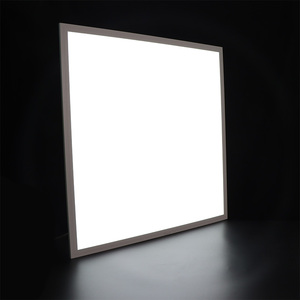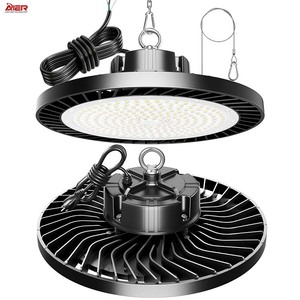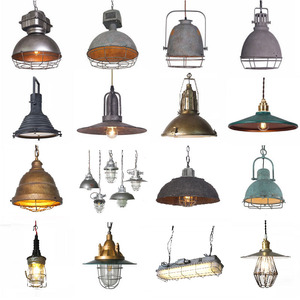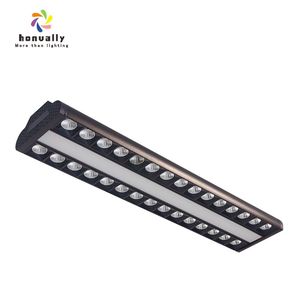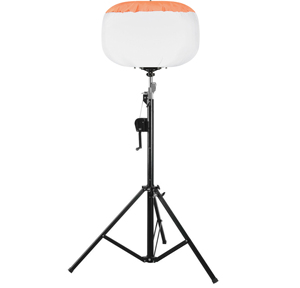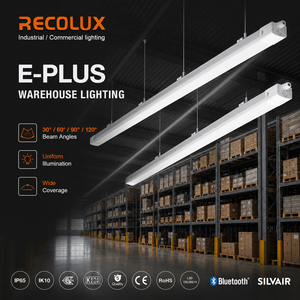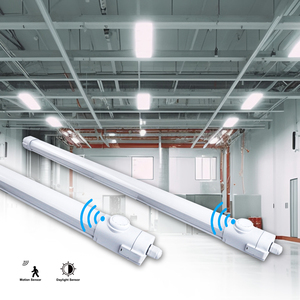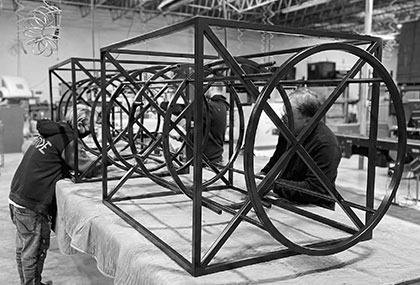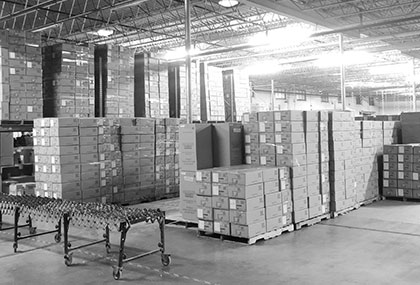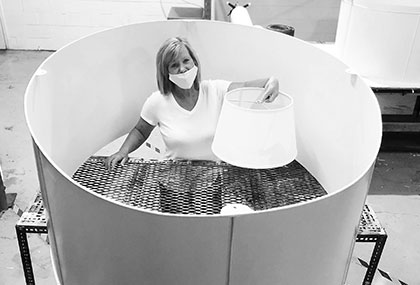
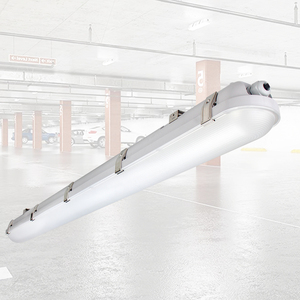
Explore our core export-grade lighting fixtures. Every unit undergoes 100% electrical safety isolation testing, high-temperature burn-in, and photometric testing prior to global dispatch.
Navigating global regulatory frameworks requires strict engineering oversight. For commercial lighting fixtures imported into the European Economic Area (EEA), a CE Marking (Conformité Européenne) is not merely a formality—it is a legally binding assertion of safety, electromagnetic compatibility, and environmental sustainability under stringent EU Directives.
As a premier OEM/ODM exporter, our manufacturing processes integrate testing protocols to meet three primary directives:
Guarantees electrical isolation, thermal management, creepage distance, and structural integrity. Luminaires are evaluated under rigorous dielectric voltage breakdown testing (up to 3750V AC) to ensure operational protection in industrial high-voltage environments.
Mandates that luminaires neither emit unacceptable electromagnetic interference (EMI) that disrupts nearby equipment, nor succumb to ambient electromagnetic disturbances (EN 55015, EN 61547, EN 61000-3-2 Class C harmonics).
Strict elimination of 10 restricted hazardous substances (including Lead, Mercury, Cadmium, and PBBs/PBDEs). Material traceability certification ensures environmental compliance for institutional B2B procurement.
Tested for Blue Light Hazard under EN 62471, achieving Risk Group 0 (RG0 Exempt) rating. Ensures eye safety across long operating hours in office buildings, educational institutions, and logistics centers.
Meets strict EU ErP efficiency requirements, incorporating recyclable structural components, high power factor (PF > 0.95), and low standby power consumption (< 0.5W) to support corporate Net-Zero goals.
Procurement choices dictate long-term Total Cost of Ownership (TCO). The dynamic table below highlights key architectural differences between CE-certified contract-grade commercial luminaires and uncertified commodity imports.
| Engineering Metric | Certified Commercial Exporter Standard | Commodity Market Alternative | Impact on Procurement TCO |
|---|---|---|---|
| Driver Electrical Topology | Isolated, Dual-Stage Constant Current (MeanWell/Tridonic/Custom) | Non-isolated linear RC step-down driver | Prevents catastrophic electrical surge & reduces failure rate to < 0.2% |
| Thermal Management | Heavy-duty Die-Cast ADC12 / Extruded 6063 Aluminum ($T_j < 75^\circ\text{C}$) | Thin stamped sheet metal or plastic housing ($T_j > 95^\circ\text{C}$) | Extends L80B10 lumen maintenance beyond 54,000 operational hours |
| Optical Diffusion & Light Quality | PMMA / Optical PC with MacAdam Ellipse 3-Step (CRI > 80 / CRI > 90) | Reclaimed PS plastic (yellows within 12 months, SDCM > 6) | Maintains color temperature stability across large commercial floorplates |
| Flicker & Stroboscopic Effect | Flicker-Free Ripple Current < 3% (IEEE 1789 Compliant) | High AC Ripple Flicker (> 30%), causing eye strain | Essential for employee wellness, CCTV security clarity, and occupational safety |
| Ingress & Impact Rating | IP65/IP66 Waterproof Silicone Gasketed + IK08/IK10 High Impact | Unsealed IP20 / Low structural rigidity | Resists dust, moisture, chemical cleaning agents, and mechanical stress |
Global supply chain managers, MEP contractors, and commercial developers face changing market dynamics. Staying competitive requires specifying luminaires aligned with future technological and regulatory trends.
Standard static lighting is being rapidly phased out in favor of addressable DALI-2, 0-10V, and wireless mesh networks (Zigbee 3.0 / Bluetooth SIG). Automated daylight harvesting and microwave occupancy sensors deliver up to 65% energy savings, matching European EPBD energy mandates.
Energy price volatility is driving demand for higher luminous efficacy. While legacy LEDs produced 100 lm/W, next-generation commercial luminaires utilize flip-chip SMD technology and high-transmittance diffusers to achieve 165 lm/W to 200 lm/W, drastically reducing operational expenditure.
Circadian-aligned lighting systems capable of dynamically adjusting CCT (2700K to 6500K) and spectral output improve cognitive focus in office environments and promote wellness in healthcare and hospitality projects. Multi-CCT DIP-switch selectability is becoming standard for warehousing stock consolidation.
With a legacy rooted in quality craftsmanship since 1922 and modern operations anchored by a 100,000-square-foot manufacturing facility in Roanoke, Virginia, alongside strategic overseas manufacturing hubs, we deliver unmatched scalability and precision.
We solve common procurement pain points—including lead-time volatility, finish inconsistencies, and shipping damage—by managing end-to-end production in-house:
Collaborative engineering consultation. Reviewing photometric IES files, electrical driver specs, finish samples, and regulatory code requirements (CE/UL/ADA).
Rapid 3D modeling, thermal imaging verification, integrating specified dimming protocols, and first-article physical sample approval prior to mass production.
Automated assembly under ISO 9001 quality controls, 100% aging burn-in test, consolidated container loading, and customs documentation handling.
We maintain approved lighting programs for major hotel chains, international commercial brands, and large-scale industrial projects worldwide, ensuring seamless project execution across global locations.
Custom engineered corridor sconces, energy-efficient guest room fixtures, and public lobby architectural lighting.
Contract-grade durability with high-turnover finish protection and integrated convenience outlets.
Custom linear LED task lighting, energy-efficient ceiling mounts, and illuminated wayfinding signage.
Expert answers to critical questions regarding CE certification, OEM capabilities, minimum order quantities, and international export logistics.
CE compliance is documented via an official EU Declaration of Conformity (DoC) issued by the manufacturer, supported by accredited third-party test reports (from laboratories like TÜV, Intertek, or SGS). These reports must demonstrate compliance with the Low Voltage Directive (EN 60598-1, EN 60598-2-x series), EMC Directive (EN 55015, EN 61547), and RoHS Directive. We provide complete technical construction files (TCF) for customs clearance and MEP engineering verification.
Yes. We specialize in dual-certified fixture development. Our engineering team selects universal-voltage drivers (100–277V AC or 347V AC, 50/60Hz), flame-retardant wiring complying with both UL94-V0 and EN standards, and component layouts that satisfy both European CE requirements and North American UL 1598 / CSA safety codes.
MOQs depend on the product category and degree of customization. Standard stock linear fixtures and high bays typically have low minimums (as few as 10 to 25 units). Fully custom architectural chandeliers or bespoke hospitality lamps can be produced starting at single-piece units for sample approval, with mass production runs scaled according to project budget requirements.
All our CE-certified commercial fixtures carry a 3-year to 5-year standard factory warranty. Because we utilize modular construction with globally recognized driver topologies (such as MeanWell, Tridonic, or Philips Xitanium), spare parts and replacement drivers can be dispatched swiftly from regional fulfillment centers or sourced locally without replacing the entire housing.
We provide extensive options, including beam angle adjustment (60°, 90°, 120°, or asymmetric aisle optics), CCT tuning (3000K/4000K/5000K/6500K), dimming protocols (0-10V, DALI-2, PWM, TRIAC), integrated emergency battery backup packs (3-hour operation), and microwave occupancy or daylight sensors.
Production lead times average 2 to 4 weeks following final shop drawing and sample approval, depending on order volume and material specifications. International ocean freight typically adds 2 to 4 weeks depending on the destination port. Air freight options are available for urgent project deadlines.
Contact our engineering and sales teams for factory-direct wholesale pricing, custom OEM/ODM submittal packages, IES photometric files, and comprehensive CE compliance documentation.