We Customize EverythingProudly Since 1922
- Shades & More
- Resource
- Company
Contract-grade LED vanity profiles, integrated mirror light bars, and moisture-sealed linear luminaires certified under strict EU CE directives (LVD 2014/35/EU, EMC 2014/30/EU).
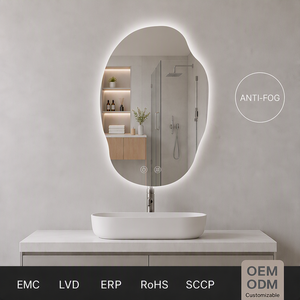
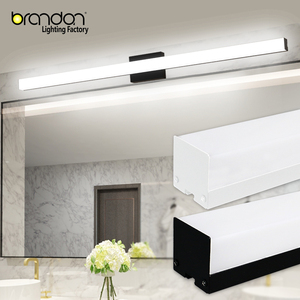
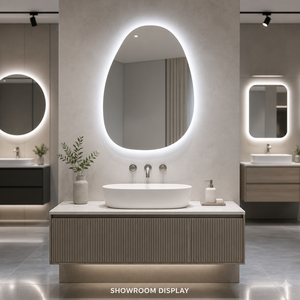
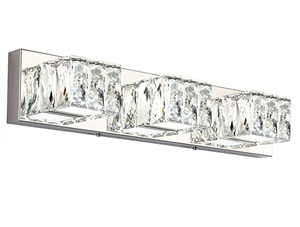
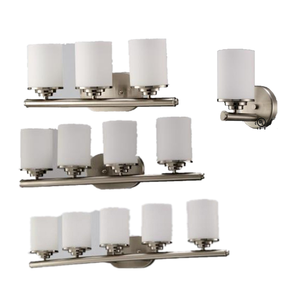
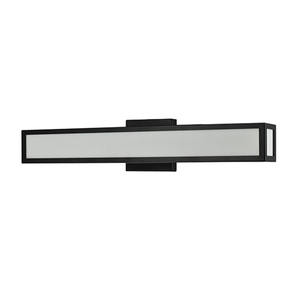
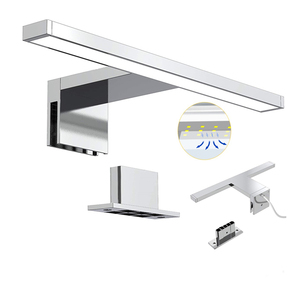
In the contemporary B2B architectural lighting sector, choosing a vendor requires evaluating engineering precision, thermal management science, and international regulatory compliance. As a premier CE certified linear lighting factory and global exporter with over a century of manufacturing heritage (operating since 1922), our production ecosystem resolves the systemic operational friction points commonly faced by commercial purchasing agents, interior architects, and lighting wholesalers.
Operating out of an integrated 100,000-square-foot advanced manufacturing facility, our engineering operations combine high-precision aluminum alloy extrusion, automated Surface-Mount Device (SMD) LED placement, state-of-the-art optical diffuser synthesis, and 100% full-load electrical safety testing. Whether executing bespoke hotel vanity illuminations or high-density office linear continuous runs, our factory standard guarantees mechanical durability, flicker-free optical performance, and seamless integration with modern building control ecosystems.
We process 6063-T5 aerospace-grade aluminum profiles in-house. From CNC precision mitering and laser-cut joinery to electroplated antique brass, matte black anodization, and anti-corrosive powder coatings designed for humid hospitality environments.
Every linear fixture and illuminated mirror component is tested against European Standards (EN 60598-1, EN 60598-2-1). We strictly verify Electromagnetic Compatibility (EMC), Low Voltage Directive (LVD) safety, and Photobiological Light Safety (IEC/EN 62471).
Our linear profiles incorporate high-density LED engines featuring SDCM < 3 (MacAdam Ellipse) batch sorting. Achieving CRI 90+ (with R9 > 50), our linear systems reproduce true skin tones and architectural textures without color shifting over time.
Securing genuine CE certification for linear lighting luminaires exported to the European Union and international markets adhering to IEC standards involves rigorous, multi-layered engineering validation. Uncertified or loosely compliant linear lighting products present severe liabilities, including electrical short circuits, harmonic distortion, radio frequency interference with wireless building systems, and premature lumen degradation caused by inadequate thermal dissipation.
Our OEM/ODM manufacturing processes adhere strictly to the following European Norm (EN) technical frameworks:
| Directive / Standard | Technical Scope & Testing Mandate | Factory Implementation & Benchmark |
|---|---|---|
| EN 60598-1 / EN 60598-2-1 | General Electrical & Mechanical Safety requirements for fixed general-purpose luminaires. | High-pot dielectric isolation testing (>1500V), thermal shock endurance, and structural strain relief verification. |
| EN 55015 / EN 61547 (EMC) | Radio disturbance characteristics and immunity requirements for electrical lighting equipment. | Custom-shielded LED drivers preventing EMI noise on local AC power grids and building wireless networks. |
| EN 62471 Photobiological Safety | Evaluation of optical radiation hazards to eyes and skin from LED light sources. | Exclusively RG0 (Exempt Risk Group) certified LED chips with optimized opal diffusers eliminating blue-light hazard spikes. |
| RoHS Directive 2011/65/EU | Restriction of Hazardous Substances (Lead, Mercury, Cadmium, Hexavalent Chromium, PBBs, PBDEs). | 100% lead-free SMT soldering processes and eco-friendly recyclable acrylic/aluminum raw material supply chains. |
| IP44 / IP65 Ingress Protection | Resistance to moisture, water splash, steam condensation, and particulate entry in vanity environments. | Continuous silicone co-extrusion seals, hydrophobic gaskets, and hermetically sealed driver enclosures. |
By enforcing these technical benchmarks at the component level, our export clients—ranging from European lighting distributors to international hotel procurement groups—avoid customs holds, field failure liabilities, and costly retrofit claims.
The global commercial lighting landscape is undergoing a structural paradigm shift driven by stringent decarbonization laws, building automation standards, and human-centric design practices. Purchasing officers and project specifiers must anticipate these four core procurement trends over the next decade:
Linear lighting is migrating rapidly from basic TRIAC/0-10V dimming to bi-directional digital protocols. DALI-2, Casambi mesh, and Matter-enabled linear drivers permit individual fixture addressability, predictive energy monitoring, and automated Human-Centric Lighting (HCL) circadian tuning.
The EU's Ecodesign Directive (SLR/ELR) mandates that light sources and control gear must be replaceable without permanently damaging the luminaire. Our linear profiles utilize tool-less removable LED gear trays and standardized driver housings to support circular economy initiatives.
Energy cost mitigation demands higher lumen output per watt. Advanced mid-power LEDs paired with micro-prismatic glare-control optics now deliver system efficacies exceeding 160 lm/W while maintaining unified glare ratings (UGR < 19) for office and hotel compliance.
Design aesthetics favor ultra-slim, frameless, and asymmetrical linear integration within vanity mirrors, headboards, and architectural coves. Asymmetrical wall-grazing optics allow precise beam steering without creating visual hotspots or shadow bands.
Understanding the technological evolution of commercial linear fixtures provides key context for evaluating modern procurement specifications. Linear lighting has transitioned through four distinct technological eras:
Characterized by high power consumption, toxic mercury content, high maintenance failure rates, uneven illumination, and non-linear dimming curves. Required frequent lamp replacement and bulky ballast enclosures.
Early LED profiles relied on flexible ribbon strips stuck inside raw aluminum channels. Plagued by visible LED pixelation (dotting effect), rapid thermal throttling, yellowing PVC diffusers, and inconsistent color binning across production lots.
Current factory standards integrate rigid aluminum-core PCBs (MCPCB), Chip-on-Board (COB) or high-density mid-power SMD arrays, co-extruded optical grade PMMA lenses, and active digital driver power factor correction (PFC > 0.95).
As a specialized manufacturer, our continuous R&D focuses on thermal micro-channel engineering. By optimizing heat sink dissipation through thermodynamic simulation software, our linear profiles maintain junction temperatures below 65°C, ensuring L80B10 lumen maintenance exceeding 50,000 operational hours.
Our engineering team delivers custom drawings, photometric IES files, and finish samples within 48 hours for contract specifications.
Critical technical, regulatory, and supply chain questions answered by our engineering and export team.
Access direct-from-factory pricing, comprehensive CE test documentation, and custom architectural linear engineering tailored to your precise project specifications.
Inquire Now