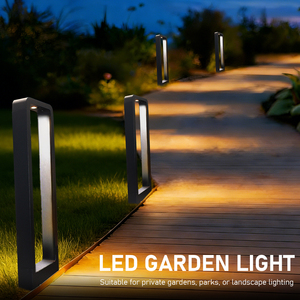
30cm 40cm 60cm 80cm 110V 220V IP65 Modern Decoration Square Warm White Waterproof Aluminum Outdoor Garden Led Lawn Bollard Light
IP65 Waterproof Square Profile 110V/220V
Send an Inquiry

Engineered for high-turn contract applications, municipal parklands, hospitality walkways, and luxury residential developments. Built with IP65/IP67 ingress protection and die-cast aluminum enclosures.
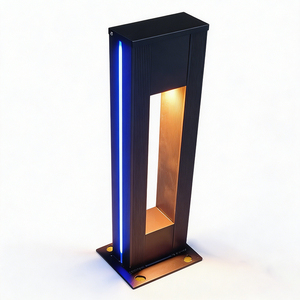
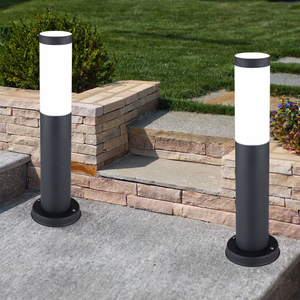
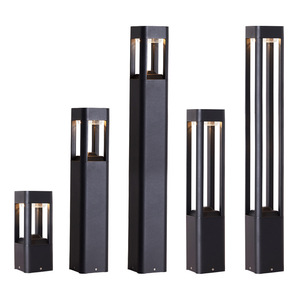
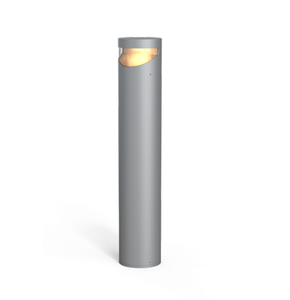
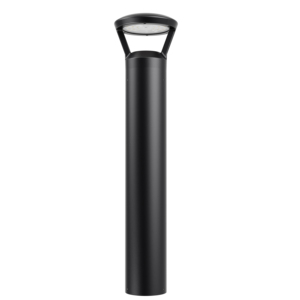
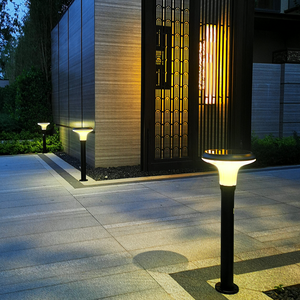
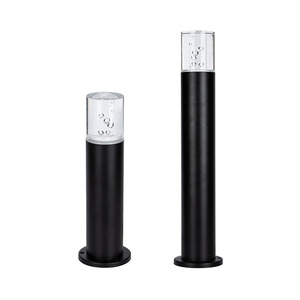
A comprehensive analysis for global architectural lighting specifiers, landscape engineers, and hospitality purchasing conglomerates.
Selecting the optimal China best bollard light factory requires looking far beyond initial aesthetic appeal or unit price. Commercial bollard luminaires operate in harsh exterior environments subject to extreme temperature fluctuations, direct ultraviolet radiation, ground moisture ingress, high-vibration pedestrian traffic, and potential physical vandalism. A contract-grade outdoor LED bollard light must seamlessly balance structural robustness with precise photometric performance.
Leading Chinese manufacturing hubs—primarily situated across Guangdong (Zhongshan, Shenzhen, Dongguan) and Zhejiang (Ningbo, Yuyao)—have shifted from low-cost assembly to state-of-the-art engineering. Premium manufacturers integrate CNC automated machining, electrostatic powder coating lines certified by AkzoNobel, in-house goniophotometer optical testing laboratories, and robotic silicone gasketing to guarantee long-term operational integrity.
Rooted in contract-grade lighting traditions since 1922 and powered by advanced Chinese manufacturing facilities spanning 100,000+ square feet, we bridge Western design standards with direct-factory production scale.
We utilize low-copper 6063 extruded aluminum profiles and A380 die-cast aluminum housings. This prevents galvanic corrosion and micro-pitting, providing superior thermal dissipation over standard recycled alloys.
Every batch undergoes 100% pressure testing, 500-hour neutral salt spray (NSS) testing, thermal shock evaluation (-40°C to +60°C), and IK08-IK10 mechanical impact qualification.
From custom height scaling (30cm to 120cm), specialized beam cutoffs, motion sensor integration, to matching architectural powder-coat finishes (RAL/Pantone), we turn shop drawings into physical prototypes within 7 to 10 days.
Key technological shifts that landscape architects, electrical consultants, and commercial developers must account for during initial project specification.
Environmental regulations across North America and Europe increasingly restrict stray upward light (light pollution). Modern bollard manufacturing prioritizes full-cutoff optical louvers, downward-facing COB (Chip-on-Board) engines, and indirect reflective cones that eliminate skyglow while maximizing usable ground lux level uniformity.
Procurement is shifting rapidly toward hybrid bollards equipped with ultra-efficient mono-crystalline panels and LiFePO4 (Lithium Iron Phosphate) battery packs. These units operate on 12V/24V low-voltage DC grids, drastically reducing trenching and wiring costs for expansive commercial developments while maintaining fail-safe grid backup during low-sunlight periods.
Commercial bollard lights are evolving into multi-sensor IoT nodes. Factories now integrate microwave radar sensors (which penetrate plastic diffusers for a seamless exterior design) paired with Zigbee 3.0, Bluetooth Mesh, or DALI-2 drivers. This enables dynamic group dimming, occupancy tracking, and energy harvesting analytics via centralized building management systems (BMS).
To meet global ESG and circular economy targets, contract specifications now mandate modularity. Rather than replacing entire bollard structures, leading factories design quick-disconnect LED modules and tool-less driver tray access. This reduces long-term maintenance costs for hotel and municipal operators by up to 70% over a 10-year lifecycle.
Understanding the critical manufacturing differences that prevent premature field failures in major landscape projects.
| Specification Feature | Contract/Commercial Grade (Our Factory Standard) | Consumer / Retail Grade |
|---|---|---|
| Primary Housing Material | 6063 Architectural Extruded Aluminum / A380 Die-Cast Corrosion-Resistant | Thin Scrap Aluminum / Recycled Die-Cast Zinc Alloys |
| Surface Pre-treatment | Chromate Conversion Coating + AkzoNobel Fluorocarbon Powder (100μm+) | Single-layer basic air-dry lacquer coating (<30μm) |
| Ingress & Impact Rating | IP65 / IP67 Sealed with Continuous Silicone Gaskets + IK08 / IK10 Glass | IP44 Nominal with Foam Gaskets / Unrated Acrylic Diffusers |
| LED Light Engine | Cree / Bridgelux / Lumileds (LM-80 Tested, L70 > 50,000 Hours) | Generic SMD 2835 Chips (L70 < 15,000 Hours) |
| Power Supply / Driver | Mean Well / Lifud / Tridonic (Surge Protection 4KV-10KV, PF > 0.95) | Unbranded RC-Capacitance Dropper Drivers (No Surge Protection) |
| Optical Efficiency | Anti-Glare Louver Optics, CCT Selectable, 100-130 lm/W Output | Bare Unshielded Diffuser, High Glare, 60-80 lm/W Output |
Direct answers from our engineering and export compliance team regarding minimum orders, customization, lead times, and quality assurance.
For standard catalogue profiles with custom powder-coat finishes, our base MOQ starts at 12 to 25 units per design. For completely bespoke ODM fixtures requiring custom extrusion tooling or die-cast mold creation, project-based MOQs typically start at 100 units. We accommodate sample pilot runs for prototype verification prior to mass production.
Waterproof performance relies on three engineering pillars: (1) One-piece continuous silicone O-rings that resist UV degradation and thermal hardening; (2) Cable gland entry points utilizing IP68 liquid-tight strain reliefs; and (3) Internal potting of driver compartments for IP67 exterior applications. Furthermore, our factory subjects 100% of finished lots to automated vacuum bubble testing.
For seaside resorts, coastal promenades, or winter environments exposed to de-icing salts, we specify a dual-layer marine-grade treatment. This involves an initial zinc-rich epoxy primer followed by an exterior-grade AkzoNobel interpon fluorocarbon powder coat, validated to survive 1,000+ hours in Neutral Salt Spray (NSS) chamber testing per ISO 9227 standards.
Yes. We offer bollards pre-wired with 0-10V dimming drivers, DALI-2 interfaces, or NEMA/Zhaga sockets. These accommodate smart photocells, microwave motion sensors, and wireless mesh nodes (Zigbee/Thread), allowing seamless integration into third-party automation systems like Lutron, Crestron, or municipal IoT gateways.
Standard production lead time for orders ranging between 100 and 1,000 units is approximately 20 to 30 calendar days following shop drawing approval and deposit receipt. Express sample prototyping can be completed in 7 to 10 working days. Shipping logistics can be coordinated FOB Ningbo/Shenzhen or CIF/DDP directly to your job site.
We supply comprehensive IES (Illuminating Engineering Society) and LDT photometric files for all standard optics. Our application engineers can generate full DIALux or Relux lighting calculations based on your CAD landscape layout to verify foot-candle levels, lux distribution uniformity, and dark-sky compliance prior to factory sign-off.
Connect directly with our senior specification team for factory-direct pricing, custom shop drawings, photometric IES files, and sample requests.
Send an Inquiry