
We Customize EverythingProudly Since 1922
- Shades & More
- Resource
- Company
Engineered for hospitality guest rooms, commercial washrooms, architectural corridors, and luxury residential developments. Built to strict OEM contract specifications with integrated LEDs, precision dimming, and custom finishes.
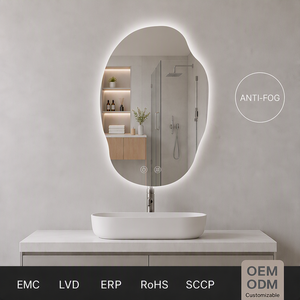
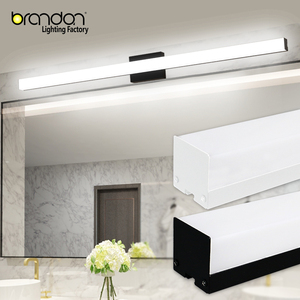
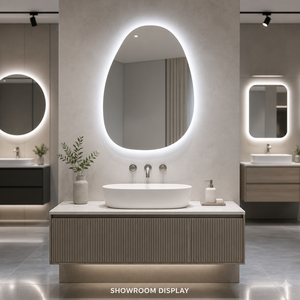
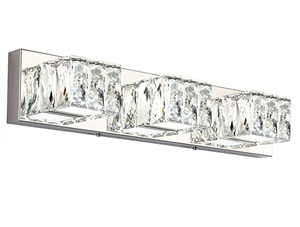
A Procurement & Engineering Guide for Commercial Lighting Buyers, Architectural Specifiers, and Hotel Brands.
In modern commercial, architectural, and hospitality lighting procurement, specifying linear LED tube lighting and integrated tubular vanity fixtures requires navigating complex trade-offs between optical efficiency, structural thermal management, electrical safety certifications, and long-term aesthetic fidelity. Whether outfitting a 500-room luxury hotel chain or engineering custom tubular pendant systems for corporate offices, choosing the right original equipment manufacturer (OEM) and original design manufacturer (ODM) is the foundational element that determines project viability and lifecycle total cost of ownership (TCO).
The structural backbone of any high-performance LED tube light or linear vanity scone is its aluminum housing extrusion. Premier OEM factories utilize 6063-T5 aircraft-grade aluminum alloy, selected specifically for its superior thermal conductivity (201 W/m·K) and exceptional structural stability under prolonged operational heat stress.
Unlike consumer-grade T8 or T5 replacement tubes that rely on cheap PVC or thin-walled glass, contract-grade tubular fixtures utilize heavy-gauge extruded aluminum heat sinks designed through Computational Fluid Dynamics (CFD) thermal modeling. This keeps the junction temperature ($T_j$) of the surface-mounted diode (SMD) chips safely below 65°C under continuous operation, preventing premature lumen depreciation and spectral color shift (chromaticity drift).
Precision-machined structural profiles offering maximum thermal dissipation, eliminating optical sag, warping, or housing oxidation over multi-year continuous operational cycles.
Optical-grade UV-stabilized diffusers engineered to deliver uniform light distribution, high optical transmittance (>88%), and zero visible hot-spotting or LED diode shadowing.
Engineered liquid silicone gaskets and sealed mechanical end-caps protecting interior LED engine boards against humidity, steam, chemical splatter, and particulate ingress.
For hospitality applications—particularly bathroom vanity sconces, illuminated smart mirrors, and high-end retail lighting—light quality directly affects human perception, psychological comfort, and spatial aesthetics. OEM tube light manufacturing requires rigorous binning protocols based on the ANSI C78.377-2017 standard.
The table below summarizes standard OEM manufacturing parameters provided to commercial specification buyers and purchasing agencies across global hotel and multi-family developments:
| Engineering Parameter | Commercial Grade Standard | Contract-Grade OEM / Custom Spec |
|---|---|---|
| Housing Material | Thin PVC Plastic / Standard Glass | 6063-T5 Aircraft Aluminum / Heavy Brass |
| Color Rendering Index (CRI) | CRI 80+ (R9 ~ 0) | CRI 90+ / CRI 97+ High R9 (>50) |
| Color Consistency | 5-Step MacAdam Ellipse | ≤ 3-Step MacAdam Ellipse (Strict Binning) |
| Driver Efficiency & THD | Efficiency >80%, THD <20% | Efficiency >90%, THD <10%, Power Factor >0.95 |
| Flicker Index (IEEE 1789) | Standard PWM (Noticeable Ripple) | Flicker-Free Deep Dimming (<0.5% Ripple) |
| Ingress Protection (IP Rating) | IP20 (Dry Locations Only) | IP44 / IP65 Moisture & Steam Seal Resistance |
| Operational Lifespan | 25,000 Hours ($L_{70}$) | >50,000 Hours ($L_{80}/B_{10}$) @ $T_a = 45^\circ\text{C}$ |
The electrical heart of any OEM tube light fixture is its LED driver system. Factory-level engineering dictates whether a linear fixture operates on internal constant-current drivers or external class 2 power units. To prevent electrical hum, flicker, or premature component failure, contract-grade tubular lights integrate high-grade drivers featuring electrolytic capacitors rated for 105°C continuous operation.
Furthermore, custom OEM production supports universal dimming protocols required by global architectural automation systems:
As international energy codes tighten and smart building ecosystems mature, commercial lighting procurement is undergoing a paradigm shift. Buyers are moving away from disposable lighting commodities toward modular, sustainable, and connected linear platforms.
Future OEM tube lights are incorporating wireless Matter, Zigbee 3.0, and Bluetooth Mesh control chips directly onto the internal driver PCB. This eliminates standalone control boxes, enabling seamless integration with Apple HomeKit, Google Home, and commercial BMS platforms.
To meet stringent ESG targets and European Right-to-Repair mandates, OEM factories are designing modular tubular lights. Instead of discarding entire fixtures upon driver end-of-life, quick-release mechanical end-caps allow field technicians to replace drivers or LED engines in under 60 seconds.
Commercial specifiers now mandate automated spectral tuning that mirrors natural sunlight progression. OEM tube light systems integrate dual-chip 2200K + 6500K arrays that dynamically shift color temperature throughout the workday to boost alertness and improve sleep patterns.
Global procurement directors are increasingly avoiding single-region supply chains. Premier lighting suppliers leverage hybrid manufacturing setups—combining high-capacity overseas component manufacturing with domestic assembly, finishing, and testing plants to guarantee lead time stability.
Combining over 100 years of contract lighting craftsmanship with state-of-the-art automated production machinery. Built to solve real-world installation, maintenance, and budget challenges.
We do not sell rigid catalog-only items. Every physical dimension, metal finish, acrylic diffuser profile, lumen output package, and mounting bracket can be tailored to match your brand book or project drawings perfectly.
Our domestic production plant in Roanoke, Virginia handles metal spinning, precision welding, electroplating, powder coating, and UL-certified wiring under one roof, backed by East and West Coast distribution centers.
Every single manufactured lot undergoes 100% high-pot electrical insulation testing, integrating UL 1598, UL 8750, CE, RoHS, and IP testing. We verify thermal dissipation before shipping to eliminate field callbacks.
In-depth answers from our engineering and specification team on custom tube light manufacturing, minimum order quantities, compliance, and production lead times.
Our OEM manufacturing process allows complete customization of physical, optical, and electrical properties. This includes custom length extrusions (from 300mm up to 3000mm linear runs), housing finishes (brushed nickel, statuary bronze, matte black, anodized gold, or powder-coated RAL colors), optical diffuser beam angles (60°, 90°, 120°, or batwing distributions), color temperature tuning (2700K to 6500K), CRI ratings (90+ or 97+), integrated motion sensors (PIR or 5.8GHz microwave), emergency battery backup modules, and custom end-cap branding laser etching.
We are a direct contract manufacturer operating a 100,000-square-foot domestic fabrication facility in Roanoke, Virginia, supported by long-term overseas component production facilities. Fixtures are custom-engineered from raw extrusions, die-cast metal parts, optical diffusers, and circuit boards rather than sourced from consumer retail catalogs. This gives us full control over mechanical tolerances, component serviceability, thermal dissipation engineering, and multi-year spare parts availability.
Color consistency is guaranteed through strict LED binning protocols. We specify diodes within a 3-step MacAdam Ellipse (SDCM ≤ 3) according to ANSI C78.377 standards. For major hospitality brand programs, we lock specific LED wafer batches for the entire production run, ensuring that replacement tube fixtures ordered 24 months later match the original guest room installations identically.
Depending on the target installation market, our linear fixtures are manufactured to meet UL 1598 (Luminaires), UL 8750 (Light Emitting Diode Equipment for Use in Lighting Products), CSA C22.2, CE, and RoHS compliance standards. Wet and damp location fixtures (such as bathroom vanity lights and outdoor corridor sconces) undergo IP44, IP65, or IP67 ingress testing to prevent water penetration and moisture condensation.
MOQs vary depending on the degree of custom tooling required. Standard custom modification programs (such as custom length cut-offs or specific powder-coat colors on existing extrusions) start as low as 12 to 25 units. Fully custom extruded profile tooling typically carries an MOQ of 100 to 500 units. Domestic fast-track production lead times range from 3 to 5 weeks post-sample approval, while high-volume international production runs require 7 to 10 weeks including ocean freight.
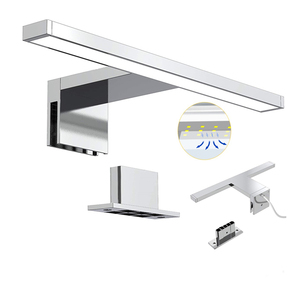
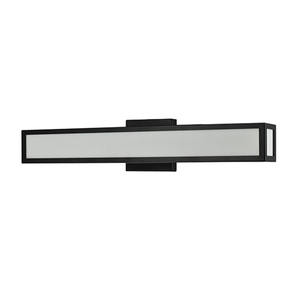
Yes. For public corridors, hotel hallways, and commercial restrooms, wall-mounted linear sconces and vanity tube lights must conform to ADA projection limits. We engineer ultra-slim wall-mount extrusions that extend less than 4 inches (102mm) from the wall surface while maintaining full optical diffusion and meeting specified foot-candle requirements on floor planes.
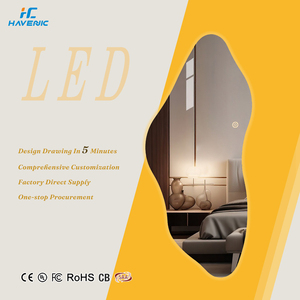
Before mass production is released, our engineering team provides comprehensive 2D CAD shop drawings, 3D renderings, and photometric IES files for designer submittal. Once approved, we build physical first-article golden samples for customer evaluation—testing fit, finish, light distribution, and dimming compatibility directly with the client's control system.
Our fixtures support all standard commercial and architectural dimming protocols. You can specify drivers engineered for 0-10V, DALI-2, DMX512, Phase-Cut (Forward/Reverse TRIAC), or wireless smart lighting platforms like Zigbee, Bluetooth Mesh, and Matter. All drivers are selected for flicker-free performance compliant with IEEE 1789 standards.
Talk directly with our specification engineers and project managers. We provide custom quotes, shop drawings, photometric files, and sample units tailored to your project schedule.