
We Customize EverythingProudly Since 1922
- Shades & More
- Resource
- Company
Select high-performance OEM/ODM fixtures ready for brand customization, UL compliance, and volume B2B procurement.
An authoritative analysis on contract manufacturing specs, thermal dissipation engineering, IP-rated ingress protection, and global procurement strategies for B2B lighting buyers, hotel brands, and landscape architects.
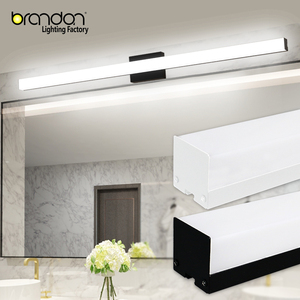
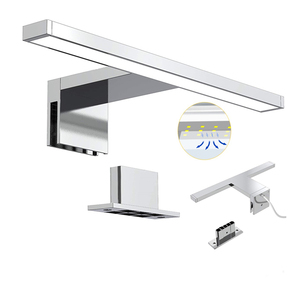
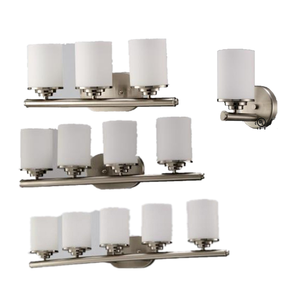
The global contract illumination market has evolved beyond simple aesthetic assembly. Today, leading OEM/ODM landscape lighting manufacturers operate at the intersection of optoelectronics, advanced material science, structural mechanical design, and stringent international compliance frameworks. Whether specifying solid brass ground bollards for high-salinity coastal resorts or precision-engineered IP44 integrated vanity sconces for luxury multi-family developments, B2B purchasing agents require manufacturing partners with vertical integration and verified heritage.
Custom contract lighting demands an intimate understanding of environmental stress vectors. Exterior landscape luminaires and high-humidity hospitality bath fixtures share common failure points: thermal throttling, seal degradation under thermal cycling, dielectric breakdown in drivers, and optical yellowing of polycarbonate lenses. A true contract manufacturer remedies these vulnerabilities at the CAD and metallurgical stage rather than through aftermarket patching.
Evaluating copper content in die-cast aluminum alloys (ADC12 vs. A360) and marine-grade 316 stainless steel to prevent subsurface galvanic corrosion in harsh outdoor soil and high-humidity indoor vanity environments.
Deploying finite element analysis (FEA) to engineer extruded aluminum heatsinks. Maintaining junction temperatures (Tj) below 75°C ensures L70 luminaire longevity exceeding 60,000 operational hours.
Complete UL 1598, UL 8750, ETL, CE, and IP65/IP68 wet-location verifications. Every OEM production run undergoes 100% high-pot voltage testing and automated photometric goniophotometer profiling.
When issuing Requests for Quotation (RFQs) to OEM/ODM manufacturing facilities, specifying standard consumer-grade terms results in rapid field failures. Contract-grade projects demand rigid parameter enforcement. Below is a comparative breakdown of commercial-grade vs. consumer-grade lighting specifications across landscape and hospitality vanity categories.
| Engineering Dimension | Consumer-Grade Standard | Contract OEM/ODM Standard (Mario Standards) | Impact on Project ROI & Reliability |
|---|---|---|---|
| Housing Metallurgy | Recycled aluminum scraps with high Fe/Cu impurities (>1.2%) | Precision-machined Solid Brass, C36000 or Low-Copper A360 Die-Cast Aluminum (<0.1% Cu) | Prevents bubbling, pitting, and structural housing failure over 10+ years of ground exposure. |
| Surface Protection | Single-layer standard electrostatic spray (20-30μm thickness) | Dual-stage chromate conversion coat + 80μm Architectural Fluorocarbon Powder Coating | Passes 1,000+ Hours Salt Spray Test (ASTM B117) without paint flaking or corrosion creep. |
| Optical Binning | 5-step or 7-step MacAdam Ellipses (Variable CCT batching) | Strict 3-step MacAdam Ellipses (SDCM <3) with CRI 90+ / R9 >50 chips | Guarantees exact color match across hundreds of guestrooms or expansive landscape zones. |
| Driver Electronics | Generic unbranded capacitors rated at 85°C (10,000-hr life) | Class 2 Isolated Constant Current Drivers (MeanWell / Inventronics) with 105°C Japanese caps | Reduces failure rate to <0.05% over 5-year warranty period; supports 0-10V, TRIAC & DALI dimming. |
| Ingress Protection | IP20 (Indoor) or unsealed IP44 foam gaskets | IP44 (Vanity Waterproofing) to IP67/IP68 Continuous Immersion Silicone O-Rings | Prevents moisture intrusion, lens fogging, and internal short-circuiting during pressure cleaning. |
Building high-performance lighting fixtures requires more than modern CNC machinery; it relies on deep-rooted institutional knowledge. Operating out of a 100,000-square-foot domestic facility in Roanoke, Virginia, alongside audited global supply chain nodes, our production architecture combines old-world craftsmanship with modern photometric precision.
Four generations of manufacturing experience mean our engineering team anticipates field challenges before steel or brass is cut. When custom hotel vanity mirrors, brass landscape spotlights, or corridor wall sconces are specified, our team reviews structural mounting tolerances, electrical code compliance (UL 1598), and serviceability. If a replacement driver or LED PCB board cannot be swapped out in under 5 minutes by onsite maintenance staff, the fixture is redesigned before client submittals are generated.
Equipped with CNC laser cutting, precision spinning, robotic welding, and automated metal bending. We transform raw brass billets, aluminum extrusions, and stainless steel sheets into complex contract geometries.
From hand-rubbed antique brass and satin nickel to high-durability matte black powder coatings, our in-house finishing lines apply protective topcoats engineered to withstand aggressive housekeeping solvents.
Managing large multi-property construction projects demands controlled delivery schedules. Cartons are packaged and labeled by floor, zone, or room number to streamline site installation and eliminate jobsite staging confusion.
As commercial developers, hotel chains, and municipal planners update their architectural specifications, lighting procurement is shifting rapidly toward intelligence, sustainability, and dynamic control integration. B2B buyers working with OEM/ODM manufacturing partners must align their product roadmaps with five critical technology transitions:
Integrating dual-channel Tunable White LED engines (2200K to 6500K) allowing vanity mirrors and outdoor pathways to shift color temperature synchronized with natural circadian rhythms, improving guest wellness and spatial ambience.
Moving away from standalone fixtures toward connected wireless mesh networks. OEM landscape luminaires now embed micro-nodes for centralized energy monitoring, automated motion dimming, and asset fault detection.
International light pollution regulations require strict BUG (Backlight, Uplight, Glare) ratings. Modern OEM landscape spot and bollard lights utilize internal optical louvers and asymmetric reflectors to direct 100% of light onto target surfaces.
Hospitality guestroom vanities and high-end retail displays demand flawless color rendition. Future OEM specs require high R9 (red) and R12 (blue) scores to reproduce accurate skin tones and luxury surface materials.
Procurement standards now penalize sealed single-use fixtures. Forward-thinking manufacturers engineer modular driver cavities and field-replaceable LED light engines to support circular economy repairability targets.
Landscape lighting arrays are increasingly transitioning to 12V/24V DC microgrids powered by localized solar-storage banks, drastically reducing trenching costs and grid energy consumption during peak resort operations.
Converting a designer's concept sketch or brand standard manual into thousands of defect-free installed luminaires requires a structured engineering gateway. Our custom contract process eliminates late-stage cost overruns through three rigorous validation phases:
We translate client 3D renderings into production SolidWorks models. Photometric IES files are calculated to simulate foot-candle output, beam spread, and glare containment across target architectural applications.
Physical golden samples are produced in our Roanoke facility. Prototypes undergo thermal chamber stress testing, dielectric withstand checks, IP water-jet immersion, and finish salt-spray validation.
Upon client submittal approval, automated SMT lines and robotic assembly lines are initialized. Every fixture passes 100% burn-in testing and electrical earth bonding verification before final palletizing.
Direct technical answers to common questions asked by hospitality purchasing groups, architects, and electrical contractors.
Our OEM/ODM engineering covers complete dimensional scaling, custom metal alloy selection (solid brass, 316 stainless steel, extruded aluminum), custom color temperature binning (2700K–6000K), optical beam angles (15° to 120°), specialized electroplated or powder-coated finishes, integrated smart sensors (PIR, Microwave, Daylight Harvesting), dimming protocol matching (TRIAC, ELV, 0-10V, DALI-2), and custom branding/laser etching on housing plates.
We mandate low-copper die-cast aluminum or solid brass substrates paired with multi-stage pretreatment. Metal surfaces undergo a zirconium chromate conversion coating followed by a minimum 80-micron layer of architectural-grade TGIC polyester powder coat. Outdoor fixtures undergo rigorous ASTM B117 salt spray testing for up to 1,000+ hours to verify immunity to oxidation, flaking, and coastal salt air degradation.
Minimum order quantities depend on fixture complexity and production path. Domestic manufacturing programs in Roanoke, VA support rapid prototyping and low-volume runs (starting at 12–25 pieces for vanity fixtures or sconces). Mass OEM/ODM offshore production programs typically require 50–100 pieces per SKU. Standard prototype turnaround is 2–3 weeks; mass production delivery ranges from 6 to 10 weeks depending on material sourcing and logistics phasing.
Yes. All luminaires manufactured under our contract scope comply with UL 1598 (Luminaires), UL 8750 (Light Emitting Diode Equipment), and CSA C22.2 standards. Wet-location fixtures carry genuine IP44 (bathroom vanity/splash zone) or IP65/IP67/IP68 (landscape/submersion) wet location certification labels required by local building inspectors and electrical contractors.
Absolutely. Our colorimetry lab utilizes spectrophotometers to match physical control swatches, RAL color codes, or existing brand standards (including aged bronze, brushed nickel, rose gold electroplating, and matte black). Finish matches undergo cross-hatch adhesion testing (ASTM D3359) and chemical resistance testing before mass production release.
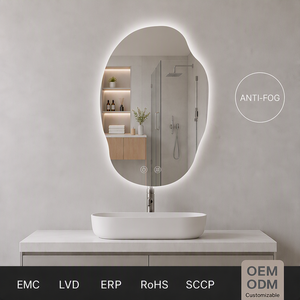
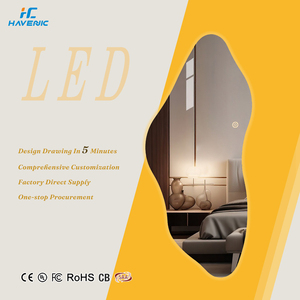
Our smart LED mirrors incorporate isolated Class 2 low-voltage touch sensor circuits and PET heating film elements mounted on the reverse mirror glass. Electronics are enclosed in sealed IP44/IP54 junction boxes on an aluminum rear frame, shielding electrical components from moisture accumulation and ensuring user safety during high-humidity shower cycles.
We supply full LM-79 and LM-80 test reports compiled by independent accredited laboratories, along with standard IES photometric files. These files allow lighting designers and architects to import accurate beam patterns and lux rendering levels directly into AGi32 or Dialux simulation software.
Partner with a proven manufacturer backed by over 100 years of engineering legacy. Speak with our specification engineers for custom submittals, factory-direct RFQ pricing, and material samples.
Inquire Now