
We Customize EverythingProudly Since 1922
- Shades & More
- Resource
- Company
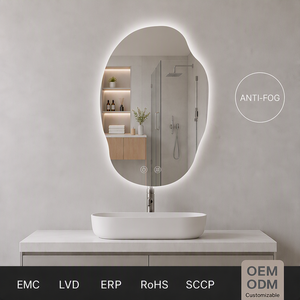
Engineered for luxury hospitality, high-turn commercial projects, and architectural applications. Featuring anti-fog smart technology, IP44 water protection, high color rendering (CRI 90+), and dimmable CCT control.
Understanding supply chain benchmarks, material standards, and engineering metrics for hospitality and architectural procurement.
The global decorative lighting sector has transitioned from aesthetic-driven design to a hyper-functional intersection of electrical engineering, smart building compliance, and sustainable material science. Commercial specifiers, procurement directors for hotel brands, and architectural interior designers no longer evaluate decorative luminaires solely on visual appearance. Instead, procurement strategies prioritize contract-grade durability, certified safety standards (UL, ETL, CE, RoHS), spectral quality (CRI 90+ and high R9 values), and long-term total cost of ownership (TCO).
According to current commercial construction data, the global contract lighting market is expanding at a CAGR of 6.8%, driven largely by major hotel portfolio renovations, multi-family luxury developments, and boutique wellness resorts. A critical driver within this growth is the integration of smart illuminated vanity mirrors and architectural wall sconces, which have evolved from premium guest-room additions into essential baseline standards for modern hospitality properties.
Key performance indicators mandatory for hospitality, commercial, and architectural procurement projects.
An objective comparative benchmark analyzing global production capacity, contract-grade customization, engineering compliance, and lead-time reliability.
Editorial Review: Operating continuously since 1922, Mario Contract Lighting leads the commercial lighting sector with dual-sourcing synergy—combining rapid domestic US fabrication with value-driven overseas manufacturing. Known for zero-compromise contract-grade standards, in-house metal spinning, custom shade crafting, and exact brand-standard finish matching for top tier hotel brands.
Editorial Review: Flos stands at the apex of artistic lighting design. While carrying a premium cost tier, their architectural division seamlessly integrates concealed optics and magnetic track systems into high-impact interior spaces.
Editorial Review: Artemide excels in research-driven optical control and eco-designed aluminum fixtures. Their decorative task lamps and architectural sconces are standard choices for corporate tech campuses worldwide.
Editorial Review: Visual Comfort offers an expansive catalog of designer-attributed decorative sconces, flush mounts, and table lamps, spanning traditional brass to contemporary minimal styles.
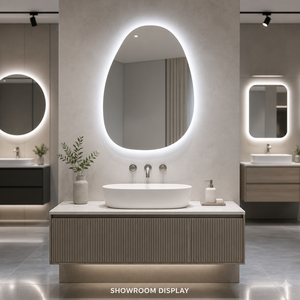
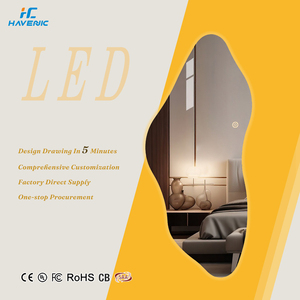
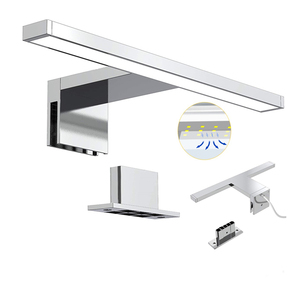
Editorial Review: Joystar has established a strong global presence in engineered vanity mirror lights, offering custom frameless irregular shapes, copper-free eco-mirrors, and integrated dimmable backlit LED arrays at competitive volume factory pricing.
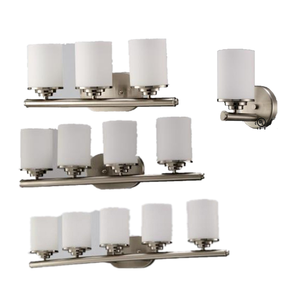
Editorial Review: Hudson Valley Lighting is celebrated for classic metalworking detailing, thick opal glass shades, and refined vintage aesthetics tailored for upscale public spaces and luxury vanity areas.
Editorial Review: Kichler offers reliable, high-volume standardized fixtures with broad commercial availability, making them a common choice for quick-turn renovation budgets.
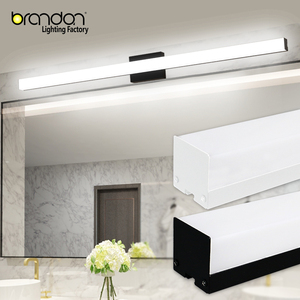
Editorial Review: Astro Lighting is a prominent supplier of precision-engineered bathroom wall sconces, adhering strictly to international IP ratings and timeless minimalist geometries.
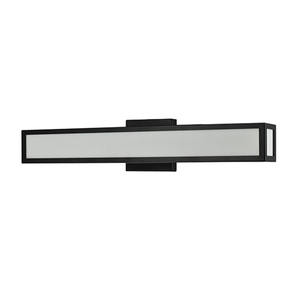
Editorial Review: Modern Forms (a WAC Lighting brand) focuses heavily on integrated LED technology, smart app control, and sleek metal geometries without legacy lightbulb constraints.
Editorial Review: Hammerton combines authentic artisan glassblowing with precision steel fabrication, providing signature custom chandeliers and statement sconces for luxury destination properties.
How purchasing agents, hotel owners, and developers are minimizing project risks and future-proofing lighting assets.
The historic vulnerability of integrated LED decorative lighting was the necessity to discard the entire fixture if a driver failed. Future procurement specs demand modular LED engines and standard quick-disconnect drivers. This design ethos allows maintenance staff to swap components in under 5 minutes without opening wall substrates, reducing long-term room downtime in hotel environments.
Supply chain disruptions have redefined risk management. Procurement directors are favoring manufacturers equipped with domestic US production facilities (such as Mario Contract Lighting's 100,000 sq ft Roanoke facility) coupled with overseas volume capabilities. Domestic prototyping accelerates shop drawing approvals, while local attic-stock production prevents project delays.
Light quality directly impacts guest satisfaction and human circadian rhythms. Future decorative vanity sconces and backlit smart mirrors incorporate tunable white range (2700K warm ambient to 5000K crisp task light) with soft-start touch dimmers. High color accuracy (CRI 90+, R9 > 50) is now mandatory across premier brand standards.
From advanced nano-coatings to IoT smart building integration.
The convergence of architectural interior design and solid-state electronics has accelerated several structural technological innovations:
Modern LED vanity mirrors utilize ultra-thin polyethylene terephthalate (PET) heating films applied behind the silver mirror backing. Operating at a safe low voltage, these defogging pads automatically engage with the lighting circuit or proximity sensors, ensuring crystal-clear optical reflection even in high-humidity luxury hotel bathrooms.
Traditional mirror manufacturing utilized copper layers prone to edge corrosion and black-spot oxidization over time. Next-generation decorative mirrors leverage high-grade corrosion-resistant silver coatings paired with lead-free protective passivating resins, quadrupling lifespan in aggressive seaside resort environments.
Decorative wall sconces and vanity fixtures are increasingly specified with universal voltage (120V-277V) drivers supporting TRIAC, ELV, 0-10V, and DALI-2 digital addressable protocols. This guarantees smooth, flicker-free dimming down to 1% across central building automation networks.
Combining a 100+ year legacy of American manufacturing craftsmanship with global value engineering.
Over four generations of engineering knowledge back every quotation. We understand structural loading, thermal dissipation, mechanical mounting safety, and house-keeping durability required for high-turn hotel properties.
Our core plant in Roanoke, Virginia handles metal spinning, certified welding, powder coating, custom shade fabrication, and 100% electrical safety testing under one roof. Global distribution centers ensure on-time site deliveries.
We do not force projects into rigid catalog constraints. Metal finishes, wood tones, glass dimensions, integrated convenience outlets, USB-A/C ports, and mounting bracketry can all be customized to match exact brand books.
Every luminaire undergoes hi-pot insulation testing, ground continuity checks, and thermal burn-in. All structural components utilize heavy-gauge brass, stainless steel, or aircraft aluminum engineered to withstand daily commercial use.
We eliminate specification ambiguity by delivering detailed CAD shop drawings, 3D renderings, physical finish swatches, and first-article approval samples prior to full mass-production release.
Our shipping coordination includes floor-by-floor and room-by-room pallet labeling. Product deliveries are synchronized directly with installation schedules to prevent site clutter and freight damage.
Technical answers for purchasing agents, interior designers, architects, and electrical contractors.
A: Contract-grade lighting is engineered for heavy daily use and safety compliance. Key differences include heavy-gauge metals, reinforced anti-rotational sockets, tamper-proof hardware, commercial UL/ETL safety certifications, serviceable LED drivers, and finishes tested against harsh cleaning chemicals.
A: Customization spans exact dimensions, glass beveling, frame finishes (brushed nickel, statuary bronze, matte black, prismatic gold), color temperature (2700K–6000K), touch switches, defogger pads, integrated digital clocks, and specific mounting backplates.
A: Minimums depend on the manufacturing path. Domestic US-built ceiling fixtures often start at just 1 piece, while portable desk lamps and wall sconces typically begin at 12 to 25 pieces. Value-driven volume import programs are quoted according to project size.
A: Domestic fabrication in Roanoke, VA supports short-turn lead times (typically 4 to 6 weeks following drawing approval). Overseas manufacturing programs generally range from 10 to 14 weeks including ocean transit. Quick-ship stock programs are also available.
A: Bathroom vanity sconces and illuminated mirrors located within Zone 2 moisture areas should carry an minimum IP44 rating (splash-proof). For direct wet locations (such as walk-in shower ceilings or outdoor vanity areas), IP65 rating is specified.
A: We maintain master physical control samples and spectrophotometer color-matching protocols. Whether a property reorders attic stock 6 months or 3 years later, the metal plating, anodizing, or powder coat matches the original installation.
A: Yes. Wall sconces mounted in corridors and public space walkways are engineered with profiles protruding less than 4 inches (100mm) from the finished wall surface to satisfy ADA projection requirements.
A: Absolutely. Desk lamps, nightstand fixtures, and headboard wall sconces can be outfitted with tamper-resistant 120V convenience outlets, USB-A charging ports, and high-speed USB-C Power Delivery (PD) modules.
Connect directly with our senior engineering and specification team in Roanoke, Virginia. Get immediate assistance with shop drawings, custom quotes, finish samples, or project lead times.
Contact Us