
We Customize EverythingProudly Since 1922
- Shades & More
- Resource
- Company
Contract-grade landscape, architectural, commercial, and decorative luminaires built for durability, IK10 impact resistance, and IP65–IP68 ingress protection in extreme outdoor environments.
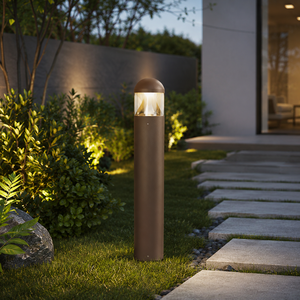
Heavy-duty extruded aluminum body, corrosion-resistant powder coat, optimized anti-glare optics for commercial walkways.
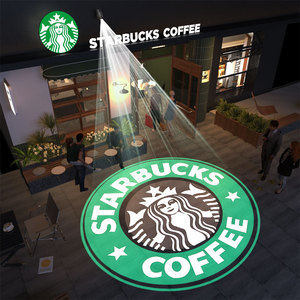
High-definition optical glass lens, active heat dissipation design, dynamic rotation projection for commercial facade branding.
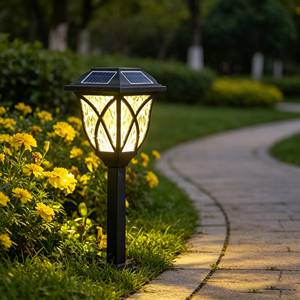
High-efficiency monocrystalline solar panel, intelligent dusk-to-dawn sensor, extended lithium battery storage cell.
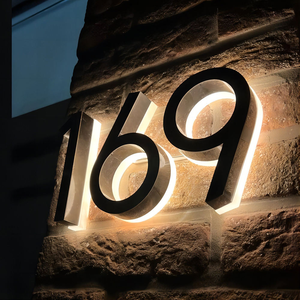
Precision laser-cut 316 stainless steel, acrylic diffuser for uniform halo back-lighting, weather-tight silicone seal.
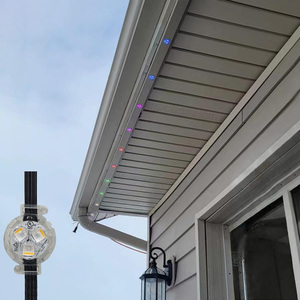
Full epoxy encapsulated IP68 waterproof rating, seamless aluminum track mounting, SPI/DMX addressable control.
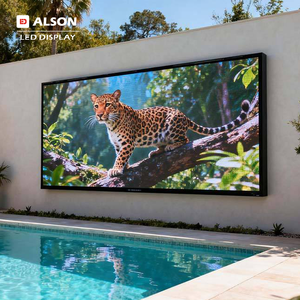
Ultra-high brightness 6500 nits, die-cast aluminum cabinet, anti-corrosion chemical treatment for pool environments.
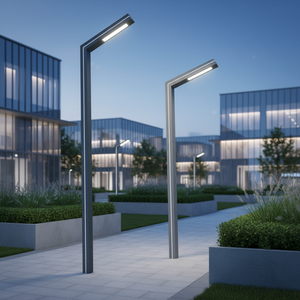
Universal mains AC voltage input, tempered glass lens, high color rendering index (CRI > 85) for vivid natural foliage illumination.
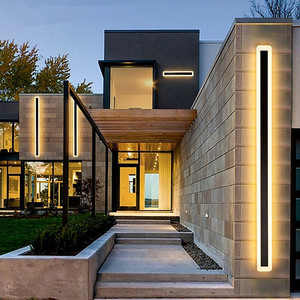
Architectural minimalist linear profile, dual-direction wall wash effect, thermal-isolated Mean Well driver integration.
Combining over a century of contract lighting heritage with cutting-edge automated production lines, customized engineering, and strict international compliance standards.
Our fixtures utilize die-cast A360/A380 aluminum alloys coated with electrostatically deposited fluorocarbon powder (AkzoNobel), undergoing 1,000+ hours of salt spray testing to withstand marine and coastal environments without oxidation.
In-house optical engineering lab develops custom PMMA lenses and reflectors achieving tight beam angles, anti-glare louvers, cut-off profiles, and zero upward light pollution compliant with Dark-Sky Association standards.
Equipped with class-leading LED drivers (Mean Well, Inventronics, Philips) featuring integrated 10kV/20kV surge protective devices (SPD), active power factor correction (PFC > 0.98), and flicker-free dimming protocols (DALI-2, 0-10V, DMX512).
From CAD rendering and rapid 3D metal prototyping to tailor-made housing colors, CCT tuning (2200K to 6500K, RGBW), wattage selection, laser-etched branding, and custom optical distributions, we adapt 100% to project specs.
Every production batch undergoes strict quality gates: 100% thermal shock aging, waterproof submersion testing (IEC 60529), drop tests, and photometric goniophotometer verification, maintaining UL 1598, CE, RoHS, and CB certifications.
Providing specialized B2B procurement support including floor-by-floor jobsite packaging, custom palletization, ocean/air freight consolidation, attic stock reservation, and dedicated technical specification support for commercial developers.
In the contemporary global commercial construction and municipal landscape development sectors, specifying exterior lighting requires a precise balance between architectural aesthetics, optical performance, thermal resilience, and life-cycle cost optimization. As a global manufacturing hub, leading Chinese outdoor lighting suppliers have evolved beyond simple assembly operations into high-precision engineering centers equipped with automated die-casting, SMT circuit placement, optical design suites, and certified testing laboratories.
When procurement managers, lighting designers, and EPC contractors evaluate a Top China Outdoor Lighting Factory & Supplier, technical compliance forms the primary benchmark. High-performance outdoor luminaires operating in challenging environmental conditions—ranging from high-humidity coastal zones to freeze-thaw temperate climates—must maintain photometric output (L80B10 > 50,000 hours) without seal degradation or driver failure.
To assist procurement specialists in selecting the appropriate fixture tier for commercial projects, the following technical matrix outlines key material and performance benchmarks across commercial, architectural, and marine-grade outdoor lighting fixtures:
| Specification Feature | Standard Commercial Grade | Architectural Project Grade | Industrial Marine & Coastal Grade |
|---|---|---|---|
| Housing Material | Standard Die-Cast ADC12 Aluminum | High-Purity A360/A380 Die-Cast Aluminum | CNC Machined 316 Stainless Steel / Marine Copper |
| Surface Protection | Standard Powder Coating (500h Salt Spray) | AkzoNobel Fluorocarbon Coat (1,000h Salt Spray) | Electropolished / C5-M Anti-Corrosion Treatment |
| Ingress Protection (IP) | IP65 (Dust-tight, Water Jets) | IP66 / IP67 (Dust-tight, Heavy Seas/Temporary) | IP68 (Continuous Submersion under pressure) |
| Impact Rating (IK) | IK07 to IK08 (Resistant to 2J impact) | IK09 to IK10 (Vandal resistant 20J impact) | IK10 Glass & Reinforced Armor Body |
| Driver & Electronics | Standard Internal Constant Current | Inventronics/Mean Well 10kV SPD integrated | DALI-2 / Zhaga Book 18 Smart Driver isolated |
| Color Consistency | 3-Step MacAdam Ellipse (SDCM < 5) | 2-Step MacAdam Ellipse (SDCM < 3) | 2-Step MacAdam Ellipse (SDCM < 3) |
The structural integrity of outdoor luminaires relies heavily on material science. High-pressure die-cast aluminum remains the industry standard for bollards, floodlights, and linear wall sconces due to its exceptional thermal conductivity (approx. 96–113 W/m·K) and light structural weight. However, raw aluminum is highly susceptible to galvanic corrosion and oxidation when exposed to moisture and air pollutants.
Leading Chinese OEM factories solve this via a multi-stage pre-treatment process: alkaline degreasing, acid etching, zirconium passivation, and dual-layer electrostatic powder coating. For sub-surface ground lights or swimming pool luminaires (such as IP68 LED point track lights or underwater video walls), structural sealing transitions from mechanical EPDM gaskets to full structural resin encapsulation, preventing micro-void water ingress caused by atmospheric pressure drops during cooling cycles.
Modern municipal codes and environmental rating frameworks (such as LEED v4 and BREEAM) strictly mandate light pollution mitigation. Excessive spill light, direct glare, and high sky-glow fractions disrupt local ecosystems and waste energy. Premium China manufacturers integrate advanced optical TIR (Total Internal Reflection) lenses and micro-prismatic diffusers engineered to direct light exclusively to targeted task areas.
By implementing targeted BUG ratings (Backlight, Uplight, Glare), architectural floodlights and pathway bollards achieve crisp beam cut-offs without spill light. Furthermore, factory-level customization allows specifiers to request warm CCT profiles (2200K–2700K) or dynamic narrow-band amber LEDs (590nm) to preserve natural wildlife habitats and sea turtle nesting zones along coastal installations.
Stay ahead of market shifts with insights into next-generation outdoor lighting innovations, smart network controls, and sustainable manufacturing standards.
Commercial exterior lighting is rapidly migrating from simple photocells to intelligent connected lighting networks (CLN). Future-proof procurement centers around Zhaga Book 18 sockets paired with D4i-certified LED drivers. This enables seamless plug-and-play integration of IoT sensors, radar motion detectors, ambient daylight harvesting, and central management software (CMS) using cellular or mesh communication protocols without redesigning the fixture housing.
As global energy costs fluctuate and zero-carbon targets take effect, commercial outdoor lighting is shifting toward solar-mains hybrid architecture. Modern solar pathway lights and commercial bollards integrate high-efficiency monocrystalline cells (>23% efficiency), long-lifecycle LiFePO4 (Lithium Iron Phosphate) battery banks, and smart MPPT controllers that dynamically throttle lumen output based on battery state-of-charge and weather predictions.
Global regulatory bodies are pushing for extended manufacturer responsibility and right-to-repair mandates. The next generation of outdoor commercial fixtures features modular driver compartments, field-replaceable LED light engines, and tool-free quick-latch access. Sourcing from factories that stock standardized replacement components ensures commercial facilities maintain an operational fixture lifecycle exceeding 15 to 20 years.
The traditional 12-week design cycle for custom architectural luminaires has been cut in half through digital twin simulation. Leading Chinese suppliers utilize computer-aided optical simulation (TracePro, LightTools) and computational fluid dynamics (CFD) thermal analysis before cutting physical steel dies. This allows developers to receive fully validated photometrics (IES/LDT files) and rapid 3D-printed prototypes within 7 to 10 working days.
Clear engineering and logistical answers for international purchasing managers, project specifiers, and commercial distributors.
Work directly with China’s leading outdoor lighting manufacturing experts. Request a detailed factory quote, photometric IES files, or custom engineering support for your upcoming commercial developments.
Get a Quote