
We Customize EverythingProudly Since 1922
- Shades & More
- Resource
- Company
Engineered for high-traffic public corridors, luxury hospitality suites, and commercial washrooms. Full compliance with PSE requirements, IP44/IP65 ingress protection, anti-fog technology, and custom dimensional specs.

Serving architectural firms, hospitality management groups, and municipal contractors across Aichi Prefecture with contract-grade manufacturing integrity since 1922.
Nagoya, as the central economic engine of Japan’s Chubu region and Aichi Prefecture, represents a unique urban landscape defined by mega-transportation hubs like JR Nagoya Station (Meieki), expansive underground commercial networks (Chika-gai), high-density corporate headquarters, and rapidly expanding luxury hospitality developments. Designing and manufacturing wayfinding signage and illuminated architectural fixtures for this market requires an intricate synthesis of spatial psychology, dual-language legibility (Japanese Kanji/Kana paired with international English standards), seismic resilience, and strict compliance with Japanese Electrical Appliance and Material Safety Law (PSE Mark) standards.
Unlike Western grid cities, Nagoya’s complex multi-level subterranean networks (e.g., Central Park Underground Mall, Meieki Underground Shopping Center) require wayfinding systems featuring micro-illuminated edge-lit panels, precise color rendering (CRI > 90), non-glare opal optical diffusers, and tactile ADA/JIS-compliant spatial cues that guide pedestrian traffic flows without cognitive friction.
Commercial spatial navigation in Nagoya has evolved far beyond static metal plaque orientation. Modern transit-oriented developments (TOD) and mixed-use skyscrapers in the Sakae redevelopment district demand integrated architectural illumination. Wayfinding systems now merge structural directional indicators directly into corridor sconces, room entry plates, backlit mirror assemblies, and zone markers.
When specifying illuminated wayfinding and custom lighted mirrors for hotel guest rooms or high-end office suites in Nagoya, architects must evaluate the interaction between artificial lumen output and natural spatial depth. High CRI (>90) vanity lights and dimmable frameless LED mirrors ensure that transitional spaces—such as elevator vestibules, hotel corridors, and executive washrooms—maintain visual continuity while enhancing guest comfort.
| Wayfinding Specification Vector | Standard Commercial Signage | Mario Contract Engineering Grade | Nagoya Market Advantage |
|---|---|---|---|
| Luminance Uniformity | Edge hot-spots, <75% diffusion | >95% uniform light sheet diffusion | Eliminates glare in subterranean underground malls |
| Electrical Safety Standard | Generic CE / Basic Transformer | PSE Certified Internal Drivers (100V-240V) | Immediate municipal & fire code approval in Japan |
| Moisture / Fog Resistance | Standard acrylic frame | IP44/IP65 Sealing + Heating Demister Pad | Withstands humid Japanese summers & bath environments |
| Finish Durability | Basic spray paint finish | Electroplated Brass / Anodized Aluminum | Resists harsh cleaning chemicals in high-turn hotels |
Japan’s stringent building safety codes necessitate that wall-mounted sconces, vanity fixtures, and corridor wayfinding signs feature high mechanical structural integrity. Vibration from heavy rail traffic around Meieki station and seismic load considerations require heavy-gauge aluminum backings, reinforced steel mounting cleats, and tempered shatter-resistant mirror glass.
Furthermore, Nagoya experiences severe seasonal humidity variations. Bath fixtures and illuminated directional signs equipped with cheap iron frames are prone to oxidation and micro-corrosion within months. By utilizing eco-friendly copper-free silver mirrors backed by aviation-grade aluminum extrusions and electroplated antique brass finishes, hardware longevity is extended past 10+ years of continuous commercial operation.
Tailored spatial illumination and custom architectural signage engineered for specific Nagoya commercial environments.
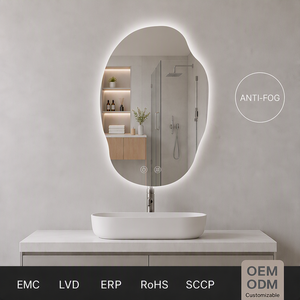
International luxury hotels surrounding Nagoya Station require sophisticated guest-room entry signs with integrated room numbers, "Do Not Disturb" backlit indicators, and matching vanity lighting. Our IP44 backlit smart mirrors with anti-fog touch sensors deliver clean aesthetics that align with modern Japanese minimal architecture.
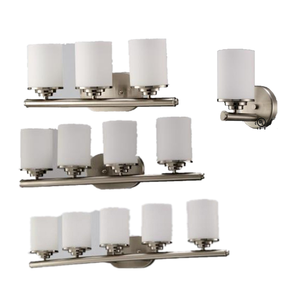
High-footfall transit zones around Chubu Centrair International Airport and Central Japan Railway terminals demand ultra-durable tactile directional wayfinding. Opal glass brushed nickel wall sconces provide low-glare perimeter illumination while maintaining structural resistance to daily public contact.
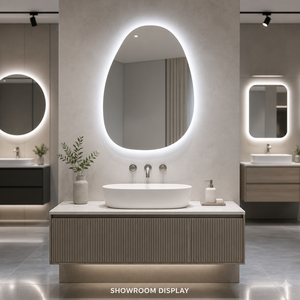
Traditional Japanese inns and luxury hot-spring resorts surrounding Aichi and Mie prefectures are undergoing modern retrofit programs. Customized irregular frameless LED mirrors (50*70cm 12W 6000K) create dramatic ambient wall washes in dressing rooms, retaining serene aesthetic harmony with natural timber and stone.
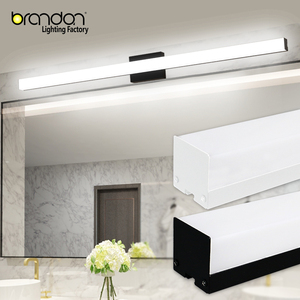
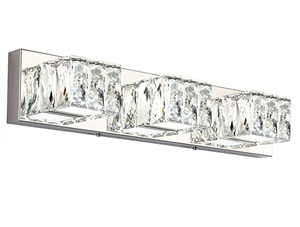
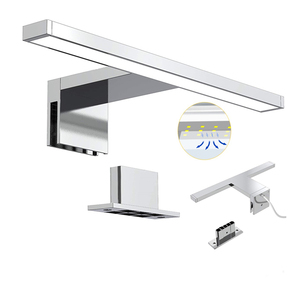
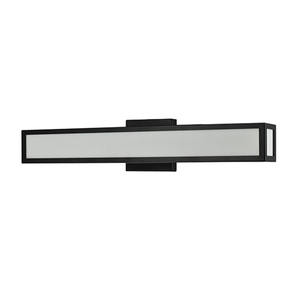
Corporate executive suites and automotive technical centers demand industrial-grade spatial precision. Custom linear wall mount vanity fixtures with high color fidelity (CRI90+) ensure natural visual clarity in executive washrooms, research labs, and client reception corridors.
Architectural shifts driving specifications in Japan's central economic corridor.
Nagoya’s luxury hotels are adopting tunable white light (2700K to 6000K) across room signs and bathroom vanity mirrors. Aligning interior light color temperatures with natural daylight improves guest well-being and matches Japan’s eco-conscious building initiatives.
Wayfinding signage in public spaces must comply with Japanese Industrial Standards for visual clarity, braille height, and iconography contrast. Integrating LED backlighting directly into tactile directional boards ensures maximum readability for elderly and international visitors.
High relative humidity in Japanese bath spaces traditionally causes mirror condensation within seconds. Contract specs now mandate built-in capacitive touch heated demister pads, operating on efficient 12V DC drivers to maintain optical clarity automatically.
Combining a 100,000 sq ft U.S. fabrication headquarters in Roanoke, Virginia with global contract manufacturing capabilities to deliver uncompromised quality.
Founded in 1922, Mario Contract Lighting brings over a century of production expertise to commercial lighting, illuminated hotel room signage, and custom vanity mirrors. We engineer products for long-term commercial wear rather than short-lived retail consumer use.
From custom metal spinning, hand-blown opal glass shades, electroplated antique brass, to exact powder-coated color matching, our engineering team tailors every fixture to your architectural specifications and project brand standards.
Every single fixture undergoes 100% electrical safety testing. We support PSE mark certification parameters for the Japanese domestic market, alongside UL, CSA, and IP44 waterproofing standards required for high-end hospitality installations.
Technical, regulatory, and logistics answers for general contractors, architects, and hotel developers in Japan.
Standard custom contract lead times range between 4 to 6 weeks for shop drawing approval, prototyping, and factory manufacturing. Shipping via ocean freight to the Port of Nagoya typically adds 2 to 3 weeks, while urgent project phases can be expedited via express air freight directly to Chubu Centrair International Airport (NGO).
Yes. All illuminated wayfinding signs, wall sconces, and backlit smart LED mirrors can be configured with universal voltage drivers (100V–240V, 50/60Hz) compliant with PSE Mark requirements. This ensures seamless integration with Japanese building power infrastructure without overheating or flickering.
Our bathroom illuminated mirror series (including Joystar irregular frameless models) are constructed with IP44 moisture-proof ratings, copper-free silver mirror backing, and sealed aluminum alloy frames. Integrated heating anti-fog demister pads prevent surface condensation even during steam-intensive bath use.
Minimums depend on the product family. Custom ceiling fixtures start as low as 1 unit; portable desk lamps and wall sconces start at 12 units; illuminated room number signage and specialized directional plates are typically quoted in 25-piece increments to optimize production and shipping efficiencies.
Yes. Our electroplating and powder-coating finishing shop can replicate control samples precisely—including antique brass, brushed nickel, oil-rubbed bronze, matte black, and clear anodized aluminum—ensuring consistency across all rooms, corridors, and public amenities.
Yes. We provide complete technical CAD drawings, 3D render submittals, photometrical IES files, and electrical wiring schematics for designer and general contractor review prior to manufacturing release.
Speak directly with our commercial lighting specification engineers. We provide instant custom quotes, submittal drawings, and material sample kits for projects across Nagoya and the Chubu region.